What physical site access requirements must be planned for fuel tankers in the UAE?
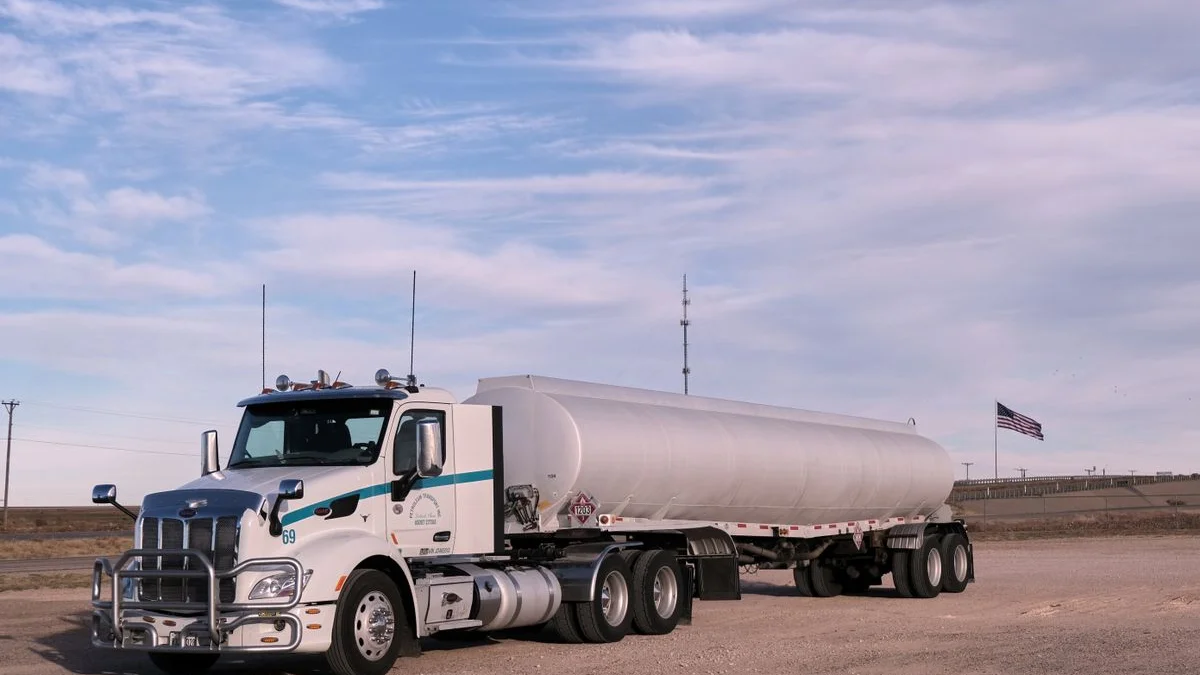
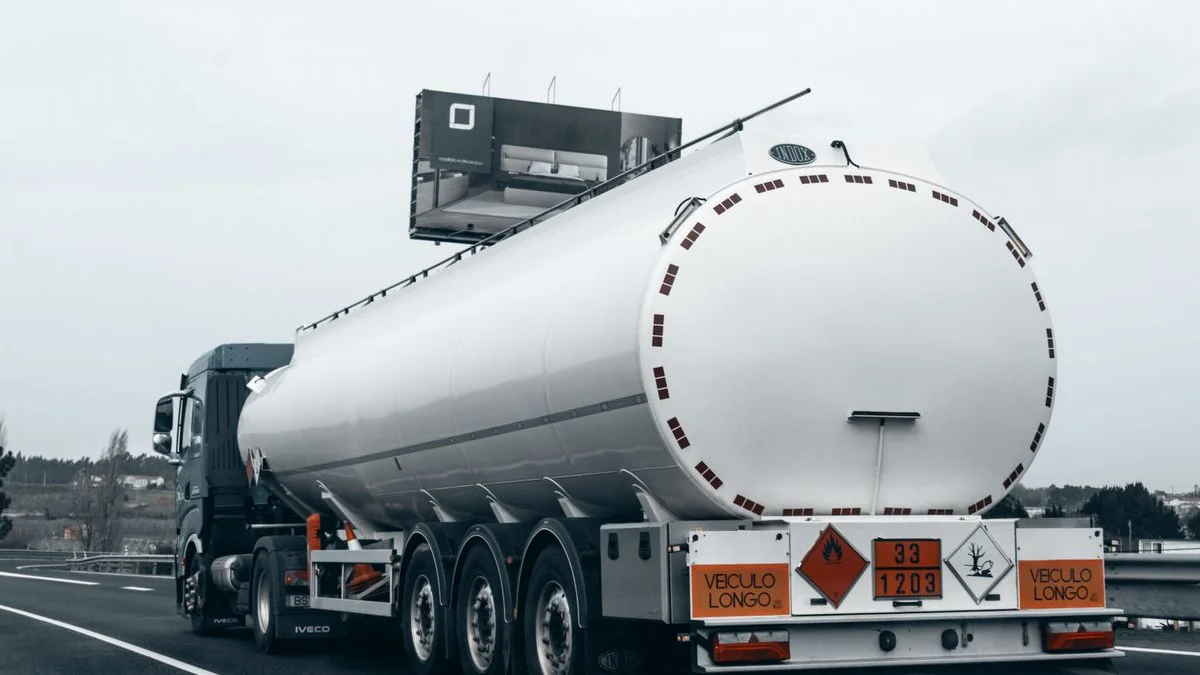
Commercial fuel delivery tankers in the UAE range from compact 2-axle rigid trucks (15 tonnes gross) to 5-axle articulated trailers (44 tonnes gross). Site planning requires minimum 4.0m road width, 4.2m overhead clearance, maximum 10% road gradient, and minimum 15m to 25m turning radii. Access haul roads must feature compacted sub-base to prevent heavy tankers bogging in soft sand.
The Costly Consequences of Inadequate Site Access Planning
One of the most frequent causes of delayed fuel deliveries across UAE construction and infrastructure projects is inadequate site access planning. A fully loaded 35,000-litre articulated road tanker carries a gross vehicle weight exceeding 44 metric tonnes.
If a site access road features uncompacted dune sand, tight 90-degree corners, or low-hanging temporary electrical cables, delivery tankers cannot safely reach the fuel storage area. The tanker must turn around, delaying generator replenishment and risking power blackouts across critical operations.
Vehicle Class Specifications & Turning Dimensions
Rental Power UAE operates a versatile delivery fleet tailored to varying site access envelopes across Dubai and Abu Dhabi:
• Class A: Mini Rigid Tankers (2,500L to 5,000L): Built on 2-axle chassis. Ideal for tight urban high-rise basements and narrow residential villa sites.
• Class B: Medium Rigid Tankers (10,000L to 15,000L): 3-axle heavy rigid trucks. The workhorse for commercial construction projects.
• Class C: Articulated Bulk Tankers (30,000L to 35,000L): Multi-axle semi-trailers. Engineered for high-volume deliveries to bulk containerized storage depots on highway and infrastructure projects.
The Science of Diesel Thermal Degradation in 50°C GCC Summer Heat
Diesel fuel is a complex organic hydrocarbon mixture comprising paraffinic, naphthenic, and aromatic compounds that remain chemically vulnerable to environmental degradation. In the Arabian Gulf, where ambient summer air temperatures regularly exceed 48°C and solar irradiance heats exposed steel fuel tanks to 65°C and higher, diesel experiences rapid thermal and oxidative acceleration.
Under prolonged exposure to high heat and dissolved oxygen, naturally occurring unstable hydrocarbon molecules oxidize. This chemical reaction triggers free-radical polymerization, causing sub-micron dissolved organic particulates to coalesce into insoluble agglomerations known as asphaltenes and high-molecular-weight organic gums. While fresh 10 PPM Ultra-Low Sulfur Diesel appears crystal clear with a light amber hue, thermally degraded fuel turns dark reddish-brown, develops an acrid burnt odor, and forms sticky sediment that precipitates to the tank floor.
When degraded fuel is drawn into modern high-pressure common rail (HPCR) diesel engines—operating at injection pressures between 1,800 and 2,500 bar with microscopic nozzle tolerances of 2 to 4 microns—these abrasive asphaltene clusters instantly blind primary fuel filter elements. This starves the high-pressure fuel pump, causes cavitation erosion, scores injector needles, and triggers sudden engine derate or catastrophic generator shutdown under heavy load.
Multi-Stage Continuous Fuel Polishing & Micro-Filtration Engineering
To safeguard high-value standby power assets at data centers, major hospitals, and continuous construction sites across Dubai and Abu Dhabi, Rental Power UAE implements active automated fuel polishing and filtration systems on all long-term bulk storage tanks. Rather than allowing diesel to sit stagnant in storage vessels, automated polishing loops circulate the tank volume on programmed weekly cycles through a multi-stage conditioning process:
- Stage 1 — Magnetic Conditioners: The fuel passes through an inline neodymium magnetic field that breaks apart polarized hydrocarbon agglomerations, dispersing sub-micron clusters into fluid suspension for effective mechanical capture.
- Stage 2 — Centrifugal Water Separation: A high-velocity centrifugal rotor spins incoming fuel, slinging heavy free water droplets and dense macroscopic debris outward against the bowl wall, dropping them into a stainless steel collection sump fitted with an automated water evacuation sensor.
- Stage 3 — Hydrophobic Coalescing Filtration (10 Micron): Specialized borosilicate micro-fiber media traps fine particulate matter while coalescing emulsified microscopic water droplets into larger globules that fall out of the fuel stream by gravity.
- Stage 4 — Super-Absorbent Micro-Polishing (2 Micron): The final polishing pass routes fuel through hydro-repellent polymer matrices that absorb remaining dissolved moisture down to below 50 parts per million (PPM), while capturing 99.9% of all solid particulates down to 2 microns absolute.
This continuous polishing loop ensures that when an emergency grid blackout occurs, standby emergency diesel generators start instantly on pristine, highly combustible fuel with optimal spray atomization, zero injector clogging, and clean exhaust emissions.
Laboratory Fuel Testing Standards & ESMA UAE.S 5003 Certification
All commercial diesel delivered by Rental Power UAE adheres strictly to Emirates Standard ESMA UAE.S 5003 and European Standard EN 590:2022 for automotive and industrial diesel fuels. Every bulk consignment dispatched from our supply terminals undergoes certified laboratory testing verified through accredited third-party laboratories (such as SGS and Bureau Veritas).
| Parameter | Test Method | ESMA / EN 590 Limit | Rental Power UAE Delivered Spec |
|---|---|---|---|
| Sulfur Content | ASTM D4294 / D7039 | Max 10.0 mg/kg (PPM) | 6.8 – 8.5 PPM (Ultra-Low) |
| Flash Point (Pensky-Martens) | ASTM D93 / ISO 2719 | Min 55.0 °C | 64.0 – 68.0 °C (Safe Handling) |
| Density at 15 °C | ASTM D4052 / ISO 3675 | 820.0 – 845.0 kg/m³ | 832.5 – 838.0 kg/m³ (Optimal) |
| Cetane Index / Number | ASTM D4737 / D613 | Min 46.0 / 51.0 | 52.4 – 54.1 (Fast Ignition) |
| Total Contamination / Particulates | EN 12662 | Max 24 mg/kg | < 8 mg/kg (Pristine Clean) |
| Water Content (Karl Fischer) | ASTM D6304 / EN ISO 12937 | Max 200 mg/kg | < 65 mg/kg (Moisture Free) |
By consistently upholding certified fuel purity through verified laboratory testing and double-walled, sealed storage infrastructure, we eliminate costly generator breakdowns and deliver maximum thermal efficiency for every litre burned. Learn more about our premium diesel delivery programs across UAE.
Site Foundation Engineering & Soil Bearing Calculations for Bulk Fuel Storage
Deploying heavy fuel storage infrastructure across UAE job sites requires accurate civil engineering calculations to prevent differential ground settlement. When fully laden with 10 PPM diesel fuel (density ≈ 0.835 kg/L), bulk storage vessels exert substantial point loads on temporary staging ground.
For instance, a standard 20,000-litre containerized fuel tank has an empty tare weight of approximately 6,200 kg and holds 16,700 kg of liquid fuel, resulting in a total operating mass exceeding 22,900 kg (nearly 23 metric tonnes). With a base contact footprint of 6.06 meters by 2.44 meters (14.8 m²), the average gross ground pressure equals approximately 15.2 kN/m² (0.15 kg/cm²). However, during crane rigging or uneven placement on sloping desert sand, corner skid pads can experience localized edge pressures exceeding 45 kN/m².
On uncompacted desert sand or coastal silt commonly encountered in Dubai Maritime City, JAFZA, or Abu Dhabi's Mussafah and Al Dhafra, allowable soil bearing capacity may not exceed 60 to 75 kPa. To prevent tank tilt—which causes fuel float sensors to malfunction and induces severe mechanical fatigue on rigid Camlock generator piping—Rental Power UAE requires sites to prepare a level sub-base compacted to minimum 95% Modified Proctor density, or stage heavy structural steel crane spreader plates (minimum 25mm thickness) beneath all tank corner castings.
Generator Interconnection Architecture: Fuel Supply & Return Loop Engineering
Interconnecting an external bulk fuel tank to prime-rated diesel generators requires precise hydraulic engineering. Modern high-pressure common rail (HPCR) diesel powerplants utilize engine-driven lift pumps that draw significantly more fuel than is consumed in the combustion chambers, circulating the excess volume through the cylinder head to lubricate and cool precision injector needles before returning it hot (often exceeding 68°C) to the tank.
| Interconnection Line | Standard Coupling | Pressure Rating | Engineering Function & Safety Control |
|---|---|---|---|
| Primary Fuel Supply | 1.5" or 2" Male/Female Camlock | PN 16 (16 Bar) Wire-Braided | Equipped with internal check valve & suction foot filter set 100mm above tank floor. |
| Injector Fuel Return | 1" or 1.5" Camlock Coupling | PN 10 Low-Backpressure | Returns hot fuel directly to bulk storage mass for natural thermal dissipation. |
| Emergency Solenoid Shutoff | 24V DC Normally Closed | ATEX / IECEx Explosion-Proof | Wired directly into generator E-Stop circuit; snaps shut within 150ms of engine fault. |
| Anti-Static Bonding Cable | Heavy Copper Clamp Reel | < 10 Ohms Resistance | Continuously dissipates electrostatic charges generated by fuel velocity in transfer hoses. |
Returning fuel into small internal base day tanks during scorching UAE summer weather causes localized fluid temperatures to climb over 75°C. At these extreme temperatures, fuel viscosity drops below the minimum 2.0 cSt threshold, leading to severe injector pump scuffing. Routing the hot return line back into a 5,000L to 20,000L external bunded rental tank provides an enormous thermal sink that cools returning diesel naturally, preserving pump lubrication and maintaining peak engine power output.
Preventive Maintenance Protocols & Environmental Spill Containment
Under Dubai Municipality Technical Guideline No. 1 and Abu Dhabi Environment Agency (EAD) Regulations for Flammable and Hazardous Liquids, commercial operators bear strict legal liability for hydrocarbon spills. An environmental leak of just 20 litres into coastal sands or municipal storm drains triggers mandatory regulatory reporting, site suspension, and costly contaminated soil bio-remediation.
Rental Power UAE enforces an uncompromising four-tier preventative maintenance and spill response protocol across all rental deployments:
- Daily Interstitial Vacuum Verification: Operators inspect the hermetic vacuum gauge on the tank's outer shell; a steady reading between -15 kPa and -30 kPa certifies zero internal or external skin compromise.
- Weekly Water Bottom Paste Testing: Technicians apply water-finding paste (Sar-Gel) to dip rods to detect any condensation accumulation on the tank bottom. Any water detected is evacuated immediately through the lowest bottom drain port before microbial colonisation can occur.
- Immediate Tier-1 Spill Containment: Every deployment includes a 250-litre hydrophobic spill kit containing polypropylene non-woven pads, perimeter absorbent booms, and hazardous waste disposal bags stationed within 3 meters of the dispensing cabinet.
- Regulatory Notification & Manifesting: In the event of an uncontained hydrocarbon incident exceeding 25 litres, site HSE management must immediately notify Dubai Municipality Environment Department (Call Center 800900) or Abu Dhabi EAD (800555). Waste must be manifested and hauled exclusively by licensed environmental waste handlers such as Tadweer or Dulsco.
Our fully engineered, double-walled rental tanks and scheduled bulk diesel supply contracts provide complete peace of mind, zero downtime, and complete statutory compliance. Get in touch with Rental Power UAE today for turnkey site power and fuel logistics across Dubai, Abu Dhabi, and Northern Emirates.
Fuel Delivery Vehicle Physical Envelopes & Ground Requirements
| Vehicle Class / Capacity | Gross Vehicle Weight (Full) | Min Road Width | Min Turning Radius | Min Overhead Clearance |
|---|---|---|---|---|
| Mini 2-Axle (2,500L - 5,000L) | 9.5 to 14.5 Tonnes | 3.5 Meters | 9.5 Meters | 3.8 Meters |
| Medium 3-Axle (10,000L - 15,000L) | 22.0 to 28.0 Tonnes | 4.2 Meters | 14.0 Meters | 4.0 Meters |
| Heavy 5-Axle Semi-Trailer (35,000L) | 40.0 to 44.0 Tonnes | 5.0 Meters | 22.0 Meters | 4.5 Meters |
Site Access Audit Protocol for Project Managers
Ensure all temporary overhead electrical cables and scaffolding have at least 4.2m vertical clearance.
Ensure gravel haul tracks are compacted to prevent heavy tanker wheels sinking in desert sand.
Never force a 40-tonne articulated fuel tanker to reverse long distances in active site traffic.
Frequently Asked Questions
Can fuel tankers traverse unpaved desert sand to reach remote sites? ▼
What is the maximum hose distance from the tanker to the storage tank? ▼
Need Reliable Diesel Fuel Delivery or Bunded Tank Rental in the UAE?
Rental Power UAE provides turnkey fuel supply services across the UAE, certified double-walled diesel fuel tank rental, and high-efficiency diesel generator hire with guaranteed on-time site mobilization.