
How Does Continuous 24/7 Fuel Supply Support Construction Dewatering Pumps in UAE?
Construction dewatering projects in coastal Dubai and Abu Dhabi operate high-flow diesel pumps 24 hours a day to prevent groundwater flooding of deep basement excavations. Dedicated fuel supply services provide scheduled mobile bowser refuelling twice daily, preventing costly pump starvation, deep-well collapse, and project handover delays.
1. Operational Dynamics of Commercial Fuel Supply Across Coastal Dubai & Abu Dhabi Excavation Projects
Deep basement excavations and subterranean infrastructure projects across coastal Dubai (such as Dubai Creek Harbour, Dubai Marina, and Palm Jumeirah) and Abu Dhabi (Al Reem Island and Saadiyat Island) contend with exceptionally shallow groundwater tables, often situated less than two meters below ground surface. To enable dry foundation casting and safe structural civil works, engineering contractors install extensive wellpoint dewatering and deep-well submersible pumping networks that must operate continuously 24 hours a day, 7 days a week, without a single second of downtime.
If a diesel dewatering pump runs dry of fuel, water levels in the surrounding soil rebound rapidly, flooding the excavation within minutes, destabilizing shoring walls, eroding concrete footings, and inflicting catastrophic financial and structural losses. Because dewatering pump day tanks typically hold only 8 to 14 hours of diesel at full load, continuous site operation requires a tightly synchronized fuel replenishment cycle. Traditional manual jerry-can refuelling is labor-intensive, hazardous, and structurally incapable of maintaining multi-pump operations.
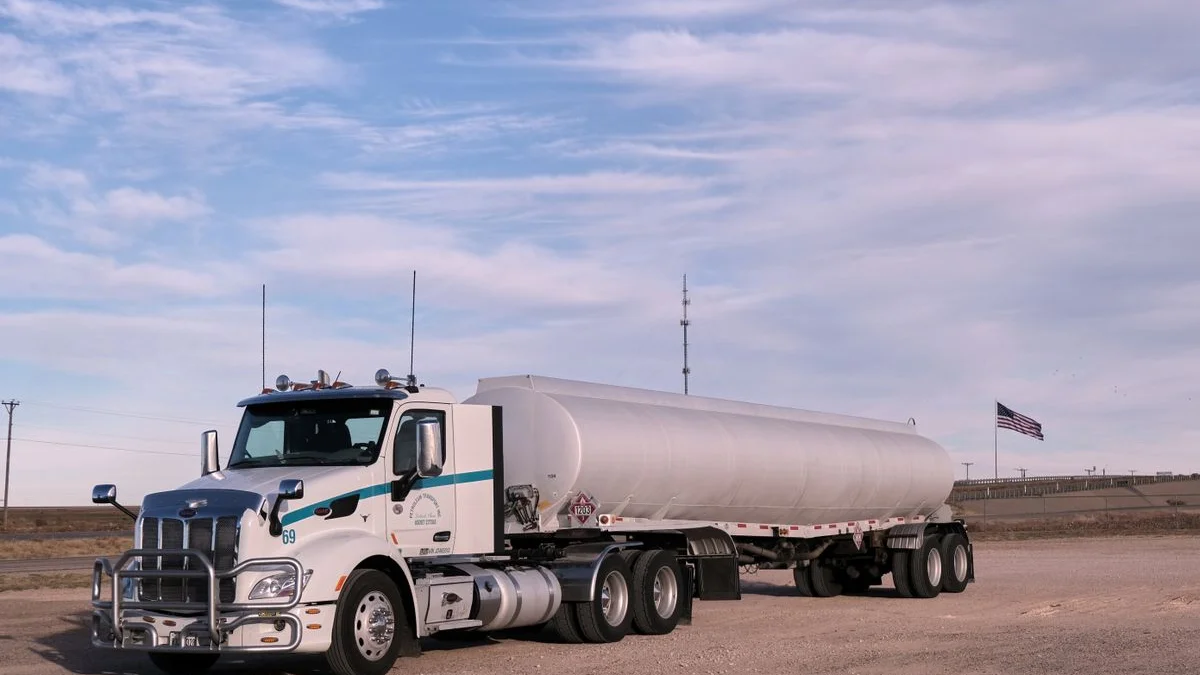
Rental Power UAE resolves this operational bottleneck by deploying dedicated mobile refuelling bowsers directly to the dewatering line twice daily. Our compact 4x4 and 6x4 delivery vehicles navigate soft construction sand and steep excavation ramps, utilizing high-flow 50-meter dispensing reels to top off each pump reservoir in minutes. Calibrated digital flow meters provide exact consumption data per pump position, allowing project managers to accurately track dewatering fuel burn and eliminate fuel starvation risks.
2. Refinery Fuel Chemistry, 10 PPM Standards & Quality Specifications
The chemical and physical properties of diesel fuel supplied in Dubai and the UAE must adhere rigorously to national and international standards. In the United Arab Emirates, the Emirates Authority for Standardization and Metrology (ESMA) and the Ministry of Industry and Advanced Technology (MoIAT) mandate compliance with standard UAE.S 5030, which mirrors the European EN 590 specification for automotive and industrial gas oil. The paramount specification parameter is sulfur content: commercial grade diesel in the UAE is exclusively Ultra-Low Sulfur Diesel (ULSD), restricted to a maximum of 10 parts per million (10 PPM / 10 mg/kg). Using sub-standard high-sulfur diesel in modern high-pressure common-rail (HPCR) engines immediately poisons exhaust aftertreatment systems, invalidates manufacturer warranties, and violates municipal environmental emission regulations.
Beyond sulfur limits, diesel fuel performance under UAE ambient conditions hinges on volatility and distillation characteristics. The minimum closed-cup flash point is strictly governed by UAE Civil Defence regulations at 66.0°C (339 K) to prevent premature vaporization and explosive hazard in high-temperature storage environments, exceeding the standard European minimum of 55°C. Density at 15°C must fall within 820.0 to 845.0 kg/m³, ensuring predictable volumetric energy content (typically 35.8 to 36.2 MJ per liter) and accurate engine fuel injection mapping. Cetane number, which reflects ignition delay and cold/warm starting behavior, must maintain a baseline minimum of 51.0, with premium refinery batches typically achieving 52.5 to 54.0.
Contamination control represents another vital technical frontier. In high-temperature, high-humidity climates, water solubility in diesel increases significantly during daytime peak heat and drops as ambient temperatures fall at night, precipitating free water droplets to the bottom of storage vessels. Left unchecked, free water promotes the rapid proliferation of anaerobic microbial colonies, producing acidic bioslimes that corrode injector tips and blind primary 10-micron fuel filters within hours. Rental Power UAE guarantees that all bulk fuel deliveries undergo multi-stage filtration at loading terminals and water-separation verification prior to final dispensing, accompanied by certified refinery Certificates of Analysis (CoA) for every single batch.
Guaranteed Engineering Parameters & Testing Standards
| Engineering Parameter | Guaranteed Delivery Value | Testing Standard / Compliance |
|---|---|---|
| Fuel Specification Grade | 10 PPM Ultra-Low Sulfur Diesel (ULSD) / EN 590 | UAE.S 5030 / ESMA Compliant |
| Sulfur Content (Maximum) | 10 mg/kg (10 PPM max) | ASTM D5453 / ISO 20846 |
| Cetane Number / Index | Minimum 51.0 (Typical 52.8) | ASTM D613 / IP 498 |
| Density at 15°C | 820.0 to 845.0 kg/m³ (Typ. 832 kg/m³) | ASTM D4052 / ISO 12185 |
| Flash Point (Closed Cup) | Minimum 66.0°C (DCD High-Ambient Standard) | ASTM D93 / ISO 2719 |
| Kinematic Viscosity at 40°C | 2.000 to 4.500 mm²/s | ASTM D445 / ISO 3104 |
| Water & Sediment Content | Maximum 0.02% vol (Max 200 mg/kg) | ASTM D2709 / ISO 12937 |
| Copper Strip Corrosion (3h at 50°C) | Class 1a (Maximum Rating) | ASTM D130 / ISO 2160 |
| Lubricity (HFRR wear scar at 60°C) | Maximum 460 µm | ISO 12156-1 / ASTM D6079 |
| Total Contamination Particulates | Maximum 24 mg/kg (ISO 4406 Cleanliness 18/16/13) | EN 12662 / ISO 4406 |
| Distillation Recovery at 360°C | Minimum 95.0% (v/v) | ASTM D86 / ISO 3405 |
| Delivery Batch Certification | Refinery Certificate of Analysis (CoA) | ADNOC / ENOC Terminal Verification |
3. Safe Offloading Protocols, Grounding Earthing & Civil Defence Standards
The offloading of Class II combustible liquids on commercial jobsites in Dubai requires strict adherence to Civil Defence hazardous materials regulations and international NFPA 30 / NFPA 30A standards. The primary ignition hazard during diesel transfer is electrostatic discharge generated by fluid shearing through delivery hoses and internal piping. Because diesel is a low-conductivity hydrocarbon, high pumping velocities (exceeding 5 to 7 meters per second) can accumulate static voltages in excess of 15,000 volts between the tanker chassis and the receiving tank structure. If an electrical arc occurs across a flammable fuel-vapor atmosphere, catastrophic fire can result.
To eliminate electrostatic risk, our delivery operators execute a mandatory three-point earthing and bonding protocol. Before any manhole cover, camlock cap, or vapor connection is opened, an intrinsically safe grounding clamp bonded to the vehicle chassis is connected directly to the customer’s certified site earthing grid (confirming resistance below 10 Ohms via digital continuity meter). The delivery hose itself incorporates continuous internal bonding wire with end-to-end electrical resistance below 100 Ohms. Furthermore, discharge pumping rates are restricted during initial line filling until the delivery nozzle or drop pipe is fully submerged, preventing high-velocity splashing and mist generation.
Environmental containment protocols are equally rigorous. Every delivery vehicle carries dedicated secondary containment bund trays positioned beneath manifold valves, hose connection points, and nozzle transitions. In the unlikely event of a mechanical coupling failure, fluids are captured within non-reactive polymer trays rather than contacting permeable soils or paved drainage systems. Delivery crews maintain 400-liter universal chemical spill containment kits containing hydrophobic absorbent pads, granular absorbent minerals, and containment booms. In compliance with UAE Municipality Environmental Planning Studies guidelines, all operators undergo bi-annual hazardous material incident response certifications.
Mandatory UAE On-Site Fuel Offloading Protocol Checklist
- Pre-Entry Access & Route Verification: Confirm turning radius (>14m for 45,000L semi-trailers, >9m for 10,000L rigid bowsers) and ground compaction bearing capacity (>180 kPa) prior to tanker arrival on jobsite.
- Electrical Bonding & Earthing: Connect heavy-duty brass earthing clamp from tanker chassis to site grounding electrode (<10 Ohms resistance) BEFORE opening discharge valves or vapor recovery lines to dissipate static charges.
- Batch Certificate & Document Verification: Cross-examine driver delivery manifest with refinery batch Certificate of Analysis (CoA), checking density at 15°C, sulfur content (<10 PPM), and flash point (>66°C).
- Automatic Temperature Compensated (ATC) Meter Zeroing: Inspect calibrated digital flow meter register (Weights & Measures certified), recording initial register reading in presence of site recipient engineer.
- Environmental Spill Containment Deployment: Position heavy-duty poly spill berm trays under manifold connections and keep 400L universal chemical spill kit (hydrophobic absorbent pads, containment booms, neutralizers) within 5 meters.
- Controlled Discharge & Flow Monitoring: Maintain pumping pressure between 2.5 and 3.8 bar, monitoring intake tank level telemetry to avoid overfilling past 90% tank nominal gross capacity.
- Post-Delivery Hose Purging & Sealed Closure: Drain delivery hose via dry-break camlock coupling, secure safety dust caps, disconnect earthing cable, and generate signed Electronic Proof of Delivery (e-POD) with timestamp.
4. Industrial Generator Fuel Sizing: Hourly Burn Rates & Daily Replenishment Schedules
Accurate fuel consumption calculation is the cornerstone of effective site logistics. Under-estimating fuel demand risks catastrophic generator shutdown under critical building or dewatering loads, while over-ordering leads to unnecessary static fuel storage and heightened thermal degradation. Diesel fuel consumption in industrial power generation is fundamentally governed by engine brake specific fuel consumption (BSFC), which typically ranges between 195 and 215 grams per kilowatt-hour (g/kWh) for modern electronically controlled Tier 2, Tier 3, and Tier 4 diesel engines operating in high-ambient UAE environments.
Because electrical loads fluctuate dynamically across operational shifts—such as air-conditioning chillers ramping up during midday peak solar irradiance or dewatering pumps running continuously against tidal ingress—procurement teams must size daily fuel deliveries across 50%, 75%, and 100% prime load profiles. The following engineering matrix provides verified consumption benchmarks and recommended 24-hour replenishment volumes for standard Cummins, Caterpillar, and Perkins industrial power packages deployed throughout the UAE:
| Generator Prime Rating | Base Electrical Load | 50% Load (L/hr) | 75% Load (L/hr) | 100% Load (L/hr) | Daily 24h Bulk Requirement |
|---|---|---|---|---|---|
| 30 kVA Prime | 24 kW | 3.8 L/hr | 5.4 L/hr | 7.2 L/hr | 130 - 175 Liters |
| 60 kVA Prime | 48 kW | 7.5 L/hr | 10.8 L/hr | 14.4 L/hr | 260 - 350 Liters |
| 100 kVA Prime | 80 kW | 12.4 L/hr | 18.1 L/hr | 24.2 L/hr | 430 - 580 Liters |
| 250 kVA Prime | 200 kW | 29.5 L/hr | 42.8 L/hr | 57.1 L/hr | 1,020 - 1,370 Liters |
| 500 kVA Prime | 400 kW | 56.0 L/hr | 82.5 L/hr | 110.0 L/hr | 1,980 - 2,640 Liters |
| 1000 kVA Prime | 800 kW | 112.0 L/hr | 165.0 L/hr | 220.0 L/hr | 3,960 - 5,280 Liters |
| 1500 kVA Prime | 1200 kW | 168.0 L/hr | 248.0 L/hr | 330.0 L/hr | 5,950 - 7,920 Liters |
| 2000 kVA Prime | 1600 kW | 224.0 L/hr | 330.0 L/hr | 440.0 L/hr | 7,920 - 10,560 Liters |
5. Strategic Regional Fuel Depots & Rapid Route Logistics Across the UAE
Efficient fuel logistics in a rapidly expanding commercial landscape demands a multi-hub dispatch infrastructure capable of navigating city traffic curfews and access constraints. Heavy transport tankers exceeding 24 tonnes gross vehicle weight face designated transit curfews on major highways during peak morning and evening traffic hours. To ensure seamless continuity for clients requiring round-the-clock fuel replenishments, Rental Power UAE operates strategically positioned dispatch depots in Jebel Ali Industrial Area, Al Quoz, Dubai Industrial City (DIC), and Mussafah Industrial Area in Abu Dhabi.
Our Jebel Ali depot provides immediate gateway access to JAFZA North, JAFZA South, Dubai South, and the Al Maktoum International Airport logistics corridor. Specialized rigid 6x4 and 4x2 fuel bowsers stationed here navigate tightly restricted port terminal access gates, maintaining scheduled fuel cycles for container handling equipment, terminal tractors, and refrigerated container backup generators. In central Dubai, our Al Quoz staging facility enables rapid sub-60-minute emergency response to Downtown Dubai, Business Bay, DIFC, and Al Barsha, where high-rise construction dewatering pumps and commercial facilities require urgent fuel deliveries during utility outages.
Furthermore, our Abu Dhabi Mussafah hub coordinates deliveries across KIZAD / KEZAD, ICAD I, II & III, and remote desert energy concessions in Al Dhafra and Liwa. Whether refueling continuous dewatering pump lines operating 24 hours a day or maintaining backup power readiness for critical server farms, our automated route optimization algorithms factor in real-time traffic telemetry, gate pass clearance windows, and site access restrictions to ensure 99.8% on-time delivery performance.
6. Thermal Degradation Kinetics & Fuel Resilience in 50°C UAE Summer Ambient Heat
Operating diesel-powered machinery and continuous power generation assets in the UAE involves contending with extreme desert ambient temperatures that reach 48°C to 50°C throughout the five-month summer corridor (May through September). When ambient temperatures surge, diesel fuel stored in surface storage tanks, equipment day tanks, and generator base reservoirs absorbs immense radiant thermal energy. Unshaded steel storage tanks frequently record internal fuel bulk temperatures exceeding 58°C to 62°C. This extreme thermal stress fundamentally alters the physical behavior and chemical stability of the fuel, triggering rapid degradation kinetics if proactive supply logistics and inventory turnover protocols are not rigorously enforced.
Thermal degradation of diesel fuel proceeds primarily through free-radical auto-oxidation. As temperature rises, dissolved atmospheric oxygen rapidly reacts with reactive unsaturated hydrocarbons (olefins and alkyl-aromatics) present in the fuel matrix. This oxidation cascade produces organic peroxides, hydroperoxides, and soluble gums, which subsequently polymerize into heavy insoluble organic particulates and dark colloidal sludge. When these sub-micron particulates agglomerate, they rapidly exceed the 10-micron and 4-micron filtration ratings of modern high-pressure common-rail (HPCR) injection systems, causing sudden filter blinding, fuel starvation, and unexpected generator shutdowns during peak electrical grid strain.
Beyond chemical breakdown, elevated temperatures substantially reduce fuel viscosity and density. At 15°C, standard UAE 10 PPM diesel exhibits a kinematic viscosity between 2.8 and 3.2 mm²/s. When fuel heating raises temperatures to 60°C inside engine fuel return loops and uninsulated day tanks, viscosity plummets to near 1.6 mm²/s. Because common-rail fuel injection pumps and precision injector needles rely entirely on the diesel fuel itself for boundary hydrodynamic lubrication, low viscosity accelerates metal-to-metal friction, nozzle scoring, and internal leakage, reducing injection pressure from design setpoints of 2,200 bar down to sub-optimal levels. Rental Power UAE manages these thermal challenges by maintaining fresh refinery fuel turnover, insulated composite supply lines, automated fuel recirculation telemetry, and night-shift bulk deliveries that deposit cool fuel directly into your equipment tanks.
7. Commercial Fuel Procurement Economics, Calibrated Metering & Cost ROI
From a commercial procurement standpoint, fuel logistics represents one of the largest single operational expenditures for heavy equipment and power generation assets. In the UAE, baseline fuel prices are governed by the UAE Ministry of Energy and Infrastructure (MoEI) Fuel Price Committee, which adjusts retail and wholesale reference prices on a monthly basis indexed to international Brent crude and refined product benchmarks (Platts Singapore Gasoil 10 PPM). Commercial customers can leverage structured supply contracts offering either monthly indexed floating rates or fixed-differential arrangements that eliminate retail distribution surcharges and provide predictable cost forecasting for multi-year project tenders.
Auditing volumetric accuracy is essential to prevent inventory shrinkage and billing disputes. Traditional dip-stick measurements in irregular or un-calibrated fuel tanks introduce volumetric measurement errors of 5% to 8%, exacerbated by thermal expansion (diesel expands by approximately 0.08% per degree Celsius of temperature rise). In UAE summer conditions where ambient temperatures shift by 15°C between morning and afternoon, uncompensated volume readings result in substantial financial discrepancies. Rental Power UAE equips all delivery bowsers and tankers with high-precision positive displacement meters featuring Automatic Temperature Compensation (ATC), which normalizes measured volume to the international standard of 15°C, ensuring you pay only for true usable energy.
Furthermore, transitioning from equipment dead-heading to dedicated mobile wet-hosing delivers compelling return on investment. On a typical construction site with 30 heavy earthmoving machines, having individual operators leave workfaces to queue at an on-site or off-site fuel station consumes an average of 45 to 60 productive machine-minutes per day. At standard machine hourly rates, this unproductive idling costs contractors thousands of dirhams daily. By scheduling mobile refuelling during night shifts or planned operator breaks, machine productivity increases by 8% to 12% while fuel theft, unauthorized dispensing, and fuel contamination risks are eliminated through digital electronic delivery receipts (e-POD).
8. Environmental Health, Safety (HSE) & Civil Defence Hazardous Materials Compliance
Compliance with environmental and hazardous material safety regulations in the UAE is rigorously monitored by multiple federal and local regulatory bodies, including the Ministry of Climate Change and Environment (MOCCAE), Dubai Municipality Environmental Department, Abu Dhabi Environment Agency (EAD), and the respective Civil Defence Directorates across each emirate. Commercial diesel fuel (UN 1202, Class 3 Flammable/Combustible Liquid, Packing Group III) is classified as a regulated hazardous substance. Any failure in secondary containment, static charge dissipation, or hazardous material transport protocols exposes contractors and operators to severe administrative penalties, site stop-work orders, and environmental remediation liabilities under UAE Federal Law No. 24 of 1999 for the Protection and Development of the Environment.
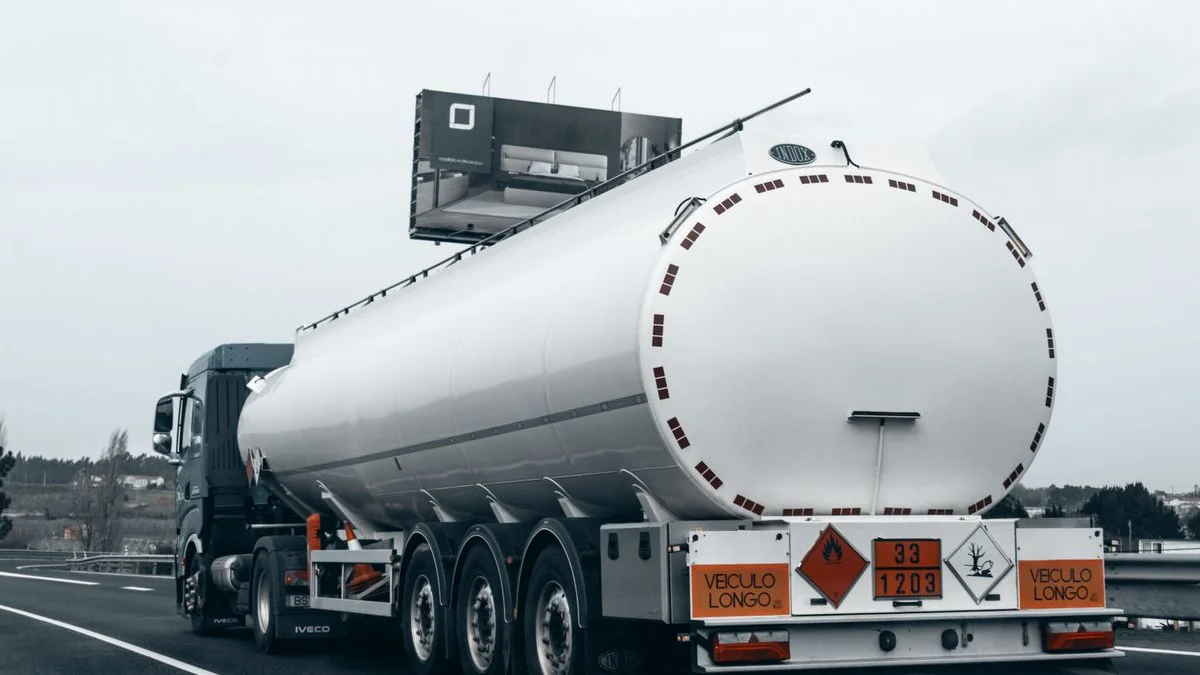
To ensure flawless regulatory compliance for all our commercial fuel supply clients, Rental Power UAE operates under strict environmental health and safety (EHS) standard operating procedures. Every road tanker in our logistics fleet holds valid Dangerous Goods Transport Certification issued by the Roads and Transport Authority (RTA) in Dubai and the Integrated Transport Centre (ITC) in Abu Dhabi. Vehicle operators are certified hazardous material drivers possessing valid ADR certifications, defensive driving qualifications, and specialized fire suppression credentials issued by Civil Defence approved academies. Tankers are equipped with rear and side under-run collision protection, certified vapor recovery systems (VRU) for VOC emission mitigation, and pneumatic fail-safe internal emergency foot-valves that automatically isolate product compartments in the event of an impact or pneumatic pressure drop.
On customer jobsites, our offloading procedures establish a mandatory 15-meter safety exclusion perimeter. Warning placards and non-sparking barricades prevent unauthorized personnel or hot-work activities (welding, grinding, cutting) from occurring within the vapor hazard zone. Spill response readiness is audited weekly across all delivery crews: each delivery vehicle carries certified hydrophobic spill absorption materials capable of recovering up to 400 liters of hydrocarbons from concrete or soil without absorbing ambient moisture. By partnering with Rental Power UAE, project directors and site HSE managers receive comprehensive environmental audit packs, including refinery batch certificates, calibration certificates, and Civil Defence operational permits, guaranteeing full regulatory compliance during municipal inspections.
Frequently Asked Questions Regarding Commercial Fuel Supply
Authoritative answers to critical commercial procurement, delivery logistics, quality assurance, and emergency SLA questions for UAE site engineers and procurement directors.
What is the minimum order quantity (MOQ) for commercial bulk diesel delivery in Coastal Dubai & Abu Dhabi Excavation Projects? ↓
How rapidly can emergency diesel fuel be delivered to jobsites in Coastal Dubai & Abu Dhabi Excavation Projects? ↓
What documentation and quality certificates accompany each diesel delivery? ↓
Can you deliver fuel directly into operating generators without shutting them down? ↓
Do your delivery trucks meet all Civil Defence and transport safety requirements? ↓
Secure Guaranteed Continuous Fuel Supply for Your Jobsite Today
Connect with Rental Power UAE’s dedicated logistics coordinators. We deliver high-grade 10 PPM Ultra-Low Sulfur Diesel via calibrated metering trucks directly into your generators, equipment fleets, or bulk storage facilities across Dubai, Abu Dhabi, Sharjah, and all Emirates.