

Knowing how to identify generator cooling system problems before a breakdown is one of the most critical preventative skills for facility engineers and maintenance supervisors in the UAE. With ambient summer temperatures across Dubai, Abu Dhabi, and Sharjah regularly reaching 50°C, an industrial diesel generator running at full load operates within a narrow thermodynamic margin. A minor cooling system restriction that goes unnoticed in January will trigger an emergency high-temperature shutdown in July, resulting in catastrophic engine downtime.
The 5 Early Warning Signs of Cooling System Degradation

1. Progressive Creep in Operating Coolant Temperature
A healthy industrial diesel engine operates between 82°C and 92°C under steady 75% load. If weekly log readings show steady temperature creeping from 88°C to 94°C and then 98°C under identical electrical loads, the cooling system is steadily losing heat transfer capacity. Waiting until the high-temperature safety trip triggers at 105°C risks warping cylinder heads and blowing head gaskets.
2. Radiator Core Thermal Imaging and Cold Spots (Internal Scale)
Use an infrared thermal camera to scan the radiator core while the engine operates at operating temperature:
- A healthy radiator displays a smooth thermal gradient (hot at the top inlet tank, gradually cooling toward the bottom outlet).
- Distinct horizontal or vertical cold patches or stripes indicate clogged internal radiator tubes blocked by hard water scale, rust deposits, or congealed silicate gel from depleted coolant additives.
3. Coolant Hose Hardening, Soft Sponginess, or Cold Leaks
Inspect flexible upper and lower silicone or EPDM radiator hoses:
- Electrochemical Degradation (ECD): Modern coolant hoses deteriorate from the inside out due to electrical micro-currents. Squeeze hoses near the clamp fittings; if the hose feels spongy, soft, or cracks audibly under hand pressure, internal hose plies have separated.
- Cold Seepage: White or green crusty crystallization around hose clamp barbs indicates micro-leaks that allow air to enter the cooling loop when the engine cools down.
4. Water Pump Weep Hole Staining (Early Bearing / Seal Failure)
Every centrifugal engine water pump features a small drainage weep hole beneath the main shaft bearing cartridge. A dry, clean weep hole indicates an intact mechanical ceramic face seal. If you observe dried green or pink coolant deposits trailing down the pump housing, the internal seal is failing. The pump will suffer catastrophic bearing seizure within 50 to 100 operating hours.
5. Drive Belt Glazing, Cracking, and Tension Loss
The engine cooling fan must pull thousands of cubic feet of air per minute through the radiator. Inspect serpentine or V-belts:
- Shiny, glazed belt sidewalls indicate belt slippage under load, causing the cooling fan to spin 15% to 25% slower than designed RPM.
- Cracks appearing more frequently than 3 cracks per inch indicate severe thermal rubber oxidation requiring immediate replacement.
Cooling System Inspection and Diagnostic Matrix
| Cooling Component | Inspection Method | Early Defect Indicator |
|---|---|---|
| Radiator Matrix Fins | Visual back-light inspection | Sand accumulation, bent aluminum fins, salt corrosion |
| Thermostats | Infrared temp delta before/after housing | Housing stays cool while engine overheats (stuck closed) |
| Water Pump | Weep hole inspection & shaft play check | Crusty coolant trail beneath shaft; radial bearing play |
| Pressure Cap | Cooling system pressure tester gauge | Fails to hold rated pressure (typically 10 to 15 PSI) |
| Coolant Chemistry | Refractometer & test strip test | Depleted SCA inhibitors, pH < 7.0, freeze point > -15°C |
Preventive Flushing and Maintenance in the UAE
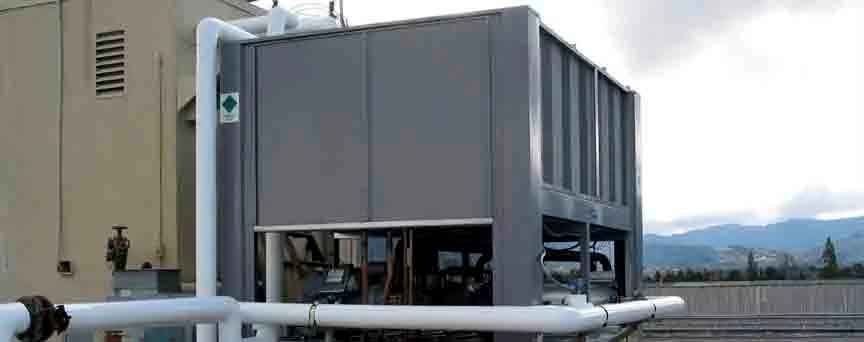
To ensure flawless summer operation, Rental Power UAE recommends complete cooling system servicing every 12 to 24 months:
- Chemical descaling flush to dissolve calcium carbonate and silicate deposits inside radiator tubes.
- Pressure-washing external radiator fins with low-pressure water and biodegradable aluminum fin cleaner.
- Replacement of primary thermostats and water pump drive belts.
- Refilling with genuine 50/50 ethylene glycol / deionized water premix containing Supplemental Coolant Additives (SCAs) to prevent cylinder liner cavitation erosion.
Explore Certified Equipment and Maintenance
Rental Power UAE provides specialized cooling overhauls, load testing, and rental power equipment across Dubai, Abu Dhabi, and Sharjah. Explore our services:
- High-ambient tropicalized generator rental in UAE guaranteed against summer overheating.
- High-capacity units including our sound-attenuated 500 kVA generator and 1000 kVA generator.
- On-site engineering offices using portacabins for sale in UAE.
Frequently Asked Questions
Why should tap water never be used in a UAE generator cooling system?
UAE desalinated tap water contains high concentrations of chlorides and calcium minerals that create rapid limestone scaling on hot cylinder liners, acting as a thermal insulator that causes localized cylinder head cracking.
What is cylinder liner cavitation pitting?
As pistons travel up and down, cylinder liners flex at high frequency, creating microscopic vapor bubbles in the coolant. When these bubbles collapse against hot liner metal at 20,000 PSI, they chip away steel particles. SCAs form a protective chemical coating that prevents this cavitation pitting.
How can I tell if a thermostat is stuck open?
If the engine takes longer than 20 minutes to reach operating temperature (80°C) or runs excessively cold under light load, the thermostat is stuck open, leading to unburnt fuel and exhaust wet stacking.
Book a Cooling System Health Audit
Protect your generator against unexpected summer shutdowns. Contact Rental Power UAE or call our cooling engineering division at +971 56 921 3754 for a certified radiator and cooling system inspection today.


