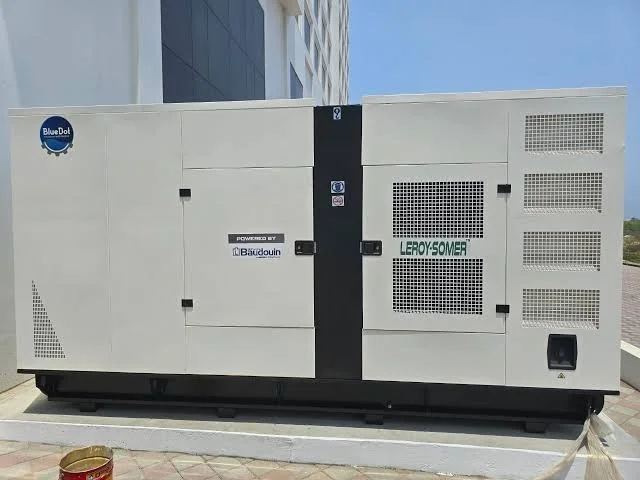
How Diesel Generators Perform in UAE’s Extreme Heat

August 8, 2026 rentalpower

Summer in the UAE isn’t just uncomfortable for people — it’s one of the toughest operating environments a diesel generator will ever face anywhere in the world. In May 2025, the National Centre of Meteorology recorded 51.6°C in Sweihan, near Al Ain — the hottest May temperature the country had seen in over two decades. Through June, July, and August, daily highs of 47-49°C are routine across the Emirates, with inland areas regularly crossing 50°C, and even coastal cities like Dubai and Abu Dhabi consistently sitting in the mid-to-high 40s.

For a piece of machinery that runs on combustion and depends on shedding heat to survive, that’s a genuinely hostile environment. So the real question for any UAE business relying on backup or rental power isn’t just “can a diesel generator handle this heat” — it’s “what specifically happens to it, and what actually needs to be true for it to keep working.”

rental generator in uae, generator for rent

Why Heat Is a Bigger Problem Than It Looks

Every diesel generator carries a power rating — the output it’s certified to deliver. That rating isn’t measured in Dubai in August. Under the international standard that governs generator sets (ISO 8528-1), the reference conditions are a mild 25°C, sea-level air pressure, and 30% relative humidity. Some manufacturers apply even stricter internal benchmarks, like 40°C, specifically because they know their equipment will be sold into hot climates.

Once ambient temperature climbs well above that reference point, three things happen at once:

  • Hot air is thinner air. Air density drops as temperature rises, which means less oxygen reaches the engine for combustion. Less oxygen means less complete fuel burn, which directly limits how much power the engine can produce.
  • Cooling gets harder exactly when it’s needed most. A radiator works by dumping heat into the surrounding air. When that air is already near 50°C, the temperature difference driving heat transfer shrinks, so the whole cooling system has to work harder just to hold steady — let alone cool a hot engine down.
  • Components have less margin. Alternators, insulation, seals, and electronics are all rated for a maximum safe operating temperature. High ambient heat eats into that margin before the machine has even started working.

The combined result is called derating — a generator’s real, usable output drops below its nameplate rating as temperature rises. Manufacturers publish derating curves for exactly this reason: a generator sized for a project without accounting for derating can leave a site under-powered on the hottest days of the year — precisely when full power is most likely to be needed.

What Makes the UAE Specifically Demanding

Heat alone would be manageable with the right equipment. What makes the UAE a genuinely difficult environment is that several stress factors hit at once:

  • Duration, not just peak temperature. The heat isn’t a short spike — high temperatures persist for months, with little overnight relief, meaning equipment rarely gets a real cooldown period.
  • High coastal humidity. Cities like Dubai, Abu Dhabi, and Sharjah sit near the Gulf, where warm sea water pushes humidity up alongside temperature — a combination that’s harder on equipment than dry heat alone, since humid air carries heat away less efficiently.
  • Fine desert dust and sand. Airborne dust works into air filters, intakes, and electronic control panels, and can compound heat stress by restricting airflow exactly where the machine needs it most.
  • Heavier loads during the hottest months. Air conditioning, water pumping, and industrial cooling all draw more power in summer — so generators are frequently asked to run harder at the exact time they’re least able to.
  • Zero tolerance for failure at critical sites. Hospitals, data centers, malls, and active construction sites can’t absorb downtime, which makes heat-related failure a genuine operational risk, not just an inconvenience.

How Generators Are Actually Built to Cope

Reliable performance in this climate isn’t automatic — it comes down to specific engineering choices:

Oversized cooling systems. Radiators and cooling fans built for hot-climate deployment are sized well beyond what a temperate-climate generator would need, giving the system more capacity to shed heat even when the surrounding air is already hot.

Turbocharging. Turbochargers force more air into the engine, partially offsetting the reduced oxygen density of hot air and helping maintain more complete combustion — and therefore more of the engine’s rated power — even in extreme heat.

Heat-rated insulation and components. Alternator windings, seals, and insulation on hot-climate-spec units are chosen specifically to tolerate sustained high operating temperatures without breaking down early.

Sealed intakes and heavy-duty filtration. Dust-rated air filters and sealed intake paths keep sand and fine particulate out of the combustion and electronic systems — a requirement that’s arguably as important in the UAE as heat tolerance itself.

High-temperature-rated oils and coolants. Standard lubricants and coolants can break down or lose effectiveness at extreme temperatures; hot-climate operation calls for fluids specifically rated for sustained high heat.

The Two Failure Points Most Guides Don’t Mention

Most articles on this topic stop at the engine and cooling system. Two other components fail just as often in UAE heat, and they’re easy to overlook:

Batteries suffer “boil-off.” Standard 12V and 24V starting batteries rely on a liquid electrolyte. In sustained extreme heat, that electrolyte can evaporate faster than normal — a phenomenon sometimes called boil-off — silently reducing the battery’s ability to start the engine when it’s needed most. A generator can be mechanically perfect and still fail to start because of a heat-damaged battery. Routine checks — clean terminals, verified voltage, topped-up electrolyte where applicable — matter as much as any engine maintenance in this climate.

Fuel quality degrades faster in heat and humidity. Water contamination and microbial growth in diesel fuel accelerate in hot, humid storage conditions, which can clog filters and injectors over time. Fuel polishing — filtering stored diesel to remove water and contaminants — is a maintenance step that’s far more relevant in the UAE than in cooler climates, and one that’s often left out of standard maintenance conversations entirely.

The Regulatory Side — Getting a Generator Legally Installed in the UAE

Beyond the engineering, there’s a compliance layer that’s easy to underestimate. Any generator installation forming part of a building’s power system in Dubai typically needs to go through Dubai Civil Defence (DCD) approval, assessed against the UAE Fire and Life Safety Code of Practice. That process generally involves submitting technical drawings and generator capacity calculations, an on-site inspection, and — for many commercial and industrial installations — a valid Annual Maintenance Contract before final certification is issued. Abu Dhabi Civil Defence runs an aligned process for installations in the capital.

This matters practically: a generator that’s technically excellent but installed without the right approvals can create real problems for a business — delayed occupancy certificates, compliance issues, or complications at inspection. Working with a rental or installation partner who understands this process (not just the equipment) is part of what “reliable” actually means in the UAE market.

Do Some Brands Handle UAE Heat Better?

Not all diesel generators are engineered the same way for hot climates, and the brand you choose does matter:

  • Caterpillar (CAT) generators are widely used across UAE industrial and construction sites, built with a reputation for rugged design intended to hold up in demanding heat and dust conditions, alongside digital monitoring and control systems.
  • Cummins units are common in mission-critical UAE deployments — hospitals, data centers, telecom — and are known for advanced digital control panels and comparatively low noise output, useful where equipment sits close to occupied buildings.
  • Perkins engines are another widely deployed choice in the region, often selected for their balance of reliability and serviceability across a broad range of generator sizes.

For any of these brands, the manufacturer’s specific derating chart for that model — not a general assumption about the brand — is what actually determines real-world output at UAE ambient temperatures. This is exactly the kind of detail worth confirming before committing to a specific generator for a summer project.

A Practical Maintenance Checklist for UAE Heat

What to check Why it matters in UAE conditions
Radiator and cooling fan condition Directly determines how well the system can shed heat when ambient air is already near 50°C
Air filters and intake seals Dust buildup restricts airflow and accelerates overheating
Battery voltage, terminals, and electrolyte level Prevents the “boil-off” failure that stops a generator from starting at all
Coolant and oil type and condition Standard fluids can break down under sustained extreme heat
Fuel tank for water contamination Humidity accelerates fuel degradation; fuel polishing prevents filter and injector issues
Enclosure/canopy airflow and ventilation clearance Poor airflow around the unit undermines even a well-designed cooling system
Load testing under real summer conditions Confirms actual performance at the temperatures the generator will really face, not just on paper

Should You Buy or Rent for the UAE Summer?

For short-term projects, seasonal demand spikes, or events, renting a heat-rated generator removes the guesswork — the equipment is already spec’d for local conditions, serviced, and swapped out if an issue arises, without the business carrying the maintenance burden through the hottest months of the year. For continuous, year-round critical power needs, purchasing may make more sense — but either way, the generator needs to be genuinely rated for UAE ambient conditions, not simply a standard unit shipped into a demanding climate it wasn’t designed for.

Frequently Asked Questions

Can a standard diesel generator handle UAE summer heat? Not reliably. Generators need to be specifically rated and equipped for high-ambient-temperature operation — oversized cooling, heat-rated components, and dust filtration — to perform consistently through UAE summers.

How much power does a generator lose in extreme heat? It depends on the specific model and its manufacturer’s derating chart, but output reductions in the range of 10-20% or more are common as temperatures climb from standard test conditions toward 45-50°C. Always check the manufacturer’s derating data for the exact model in question rather than relying on a general estimate.

Why do generators fail to start in UAE heat even when the engine seems fine? Battery failure from heat-related electrolyte loss (“boil-off”) is one of the most common — and most overlooked — causes. Regular battery checks are essential in this climate.

Do I need Civil Defence approval for a generator in Dubai? Generator installations forming part of a building’s power system typically require Dubai Civil Defence review as part of the broader fire and life safety approval process. Requirements vary by project type and scale, so it’s worth confirming early with a partner familiar with the process.

Is it better to rent or buy a generator for UAE conditions? For short-term, seasonal, or event-based needs, renting a heat-rated unit is usually more practical. For continuous long-term power needs, purchasing can make sense — provided the unit is genuinely specified for UAE ambient conditions.