Everything You Need to Know Before Buying a Portacabin in UAE
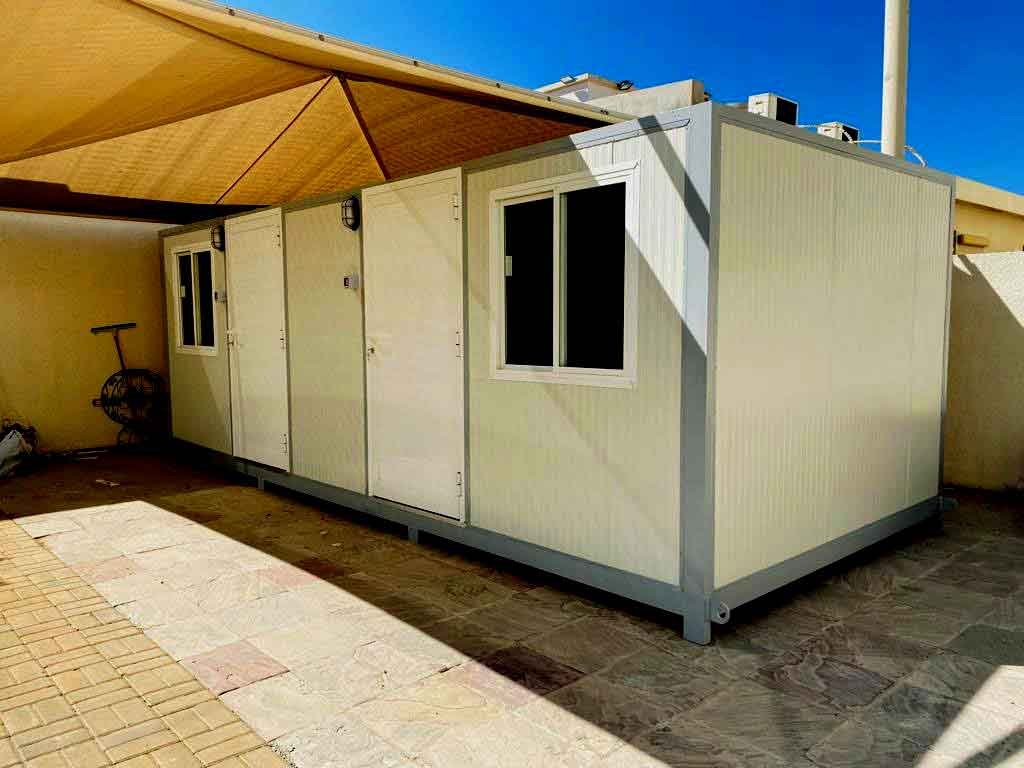
Portacabins have become a practical solution for construction sites, industrial facilities, labor accommodation, security points, offices, storage areas and other projects across the UAE. Their main advantage is that they can be manufactured away from the project site, transported to the required location and installed much faster than a conventional building.
However, buying a portacabin is not simply a matter of choosing a size and comparing prices. The structure, insulation, fire performance, electrical installation, air conditioning, intended use, transportation, installation and local approval requirements all need to be considered before placing an order.
This is particularly important in the UAE, where buildings and temporary structures have to cope with high temperatures, strong sunlight, humidity, dust and, depending on the location and application, demanding fire and safety requirements. Dubai Municipality states that its building code establishes minimum requirements for the health, safety, welfare and environmental performance of buildings, while the UAE Government notes that local municipalities oversee building and construction safety and apply building and fire-safety requirements.
What Is a Portacabin?
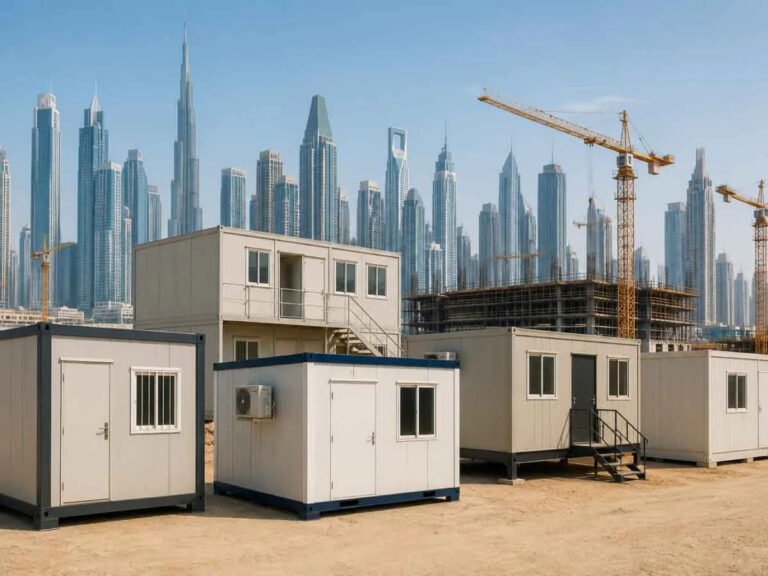
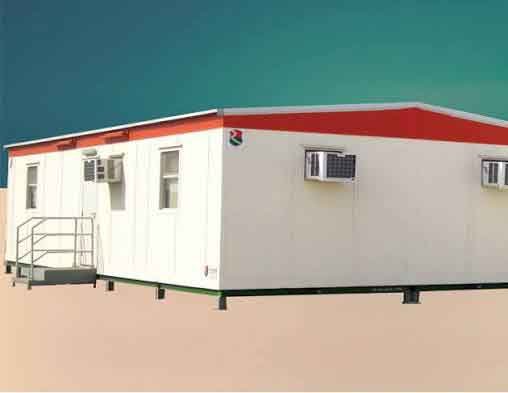
A portacabin, also commonly written as porta cabin or portable cabin, is a prefabricated modular structure manufactured in a factory and transported to a project site. Depending on its design, it may use a steel frame with insulated sandwich panels, doors, windows, flooring, electrical systems, lighting and air-conditioning provisions.
In the UAE market, portable cabins are available for applications ranging from small security cabins to site offices, accommodation units, ablution facilities and larger modular buildings. Industry suppliers commonly offer standard modules as well as customized layouts and specifications.
The important point for a buyer is that a portacabin is not a single standardized product. Two cabins with identical external dimensions can have significantly different specifications, insulation, fire performance, internal finishes and equipment.
Why Businesses Buy Portacabins in the UAE
The biggest attraction of a portacabin is speed. Since much of the manufacturing and finishing takes place away from the project site, installation can be considerably quicker than constructing a conventional permanent building.
Portacabins are commonly used as construction site offices, project management rooms, meeting rooms, security cabins, storage spaces and accommodation facilities. UAE suppliers also provide specialized units such as ablution blocks, kitchens, mess rooms and customized modular structures for construction, oil and gas, marine and industrial applications.
Another advantage is flexibility. A project may require additional office or welfare space during a particular phase and no longer need it after completion. A relocatable modular structure can potentially be moved or reused, subject to its design and the requirements of the destination site.
Decide the Purpose Before Choosing the Cabin
The first question to ask is not “How much does a portacabin cost?” but “What will the portacabin be used for?”
A site office has different requirements from worker accommodation. A security cabin does not need the same internal layout as a meeting room, while an ablution unit requires plumbing, drainage and water-storage provisions.
For a construction project, a site office may require desks, electrical sockets, lighting, data connections, air conditioning and meeting space. Accommodation requires greater attention to ventilation, sanitary facilities, sleeping arrangements, fire safety and applicable occupancy requirements. Storage cabins may require a stronger floor and enhanced security rather than extensive interior finishing.
Defining the application first prevents buyers from paying for unnecessary features or, more seriously, purchasing a cabin that is unsuitable for its intended use.
Choose the Right Size and Layout
Portacabin dimensions vary according to the manufacturer and application. Common market offerings include modules around 20 ft and 40 ft, while custom dimensions and interconnected modules are also available.
When choosing a size, consider the number of people who will use the cabin, furniture requirements, circulation space, storage and future expansion.
For example, a small project office for two or three people may need considerably less space than a project headquarters containing engineers, supervisors, document storage and a meeting area.
It is also important to distinguish between the advertised external dimensions and the usable internal floor area. Wall and roof panels, partitions and service spaces reduce the area available inside.
A professional supplier should provide a clear drawing showing external dimensions, internal dimensions, doors, windows, partitions and service locations before manufacturing begins.
Pay Close Attention to the Steel Structure
The structural frame is one of the most important components of a portacabin. It supports the walls, roof, floor and lifting or transportation arrangements.
Buyers should ask what type of steel is being used, how the frame is protected against corrosion and whether the structural design is appropriate for the intended application.
Some suppliers use painted mild-steel structures, while others offer galvanized or specially treated steel systems. The appropriate choice depends on the cabin’s location, exposure, intended service life and project specifications.
Do not judge structural quality simply by looking at the external finish. Ask for the technical specification and, where appropriate, structural drawings or engineering documentation.
Insulation Is Critical in the UAE Climate
A portacabin without appropriate insulation can become extremely uncomfortable during UAE summer conditions and may place additional demand on the air-conditioning system.
Many UAE portable cabins use insulated sandwich panels. Depending on the product, these may contain polyurethane, PIR, rockwool, EPS or other insulation materials. Supplier specifications show that panel thickness and construction can vary significantly between products.
Do not focus only on panel thickness. Ask about the complete panel construction, insulation material, thermal performance, external and internal skins, joints and roof system.
For a cabin that will be occupied regularly, the roof deserves particular attention because it receives substantial solar exposure. Good insulation, suitable roof construction and properly sealed joints can make a meaningful difference to indoor comfort and cooling requirements.
Check the Air-Conditioning Requirements
Air conditioning is not an optional luxury for most occupied portacabins in the UAE. A site office or accommodation cabin needs a cooling system suitable for the local climate and the cabin’s actual heat load.
Some UAE suppliers provide split air conditioning as part of their standard site-office packages, while others provide an AC provision that allows the buyer to select and install the equipment separately.
Before purchasing, confirm the AC capacity, number of units, electrical load, installation location and whether the quoted price includes the equipment and installation.
Avoid selecting an air conditioner solely according to a generic cabin size. Occupancy, insulation, windows, orientation, equipment and solar exposure can all affect cooling requirements.
Fire Safety Should Never Be an Afterthought
Fire safety is one of the most important issues when purchasing a portacabin, particularly when the unit will be occupied or installed on a construction, industrial or accommodation site.
The UAE Government explains that local municipalities oversee building and construction safety and that the applicable codes address construction safety and fire protection. Dubai Municipality also maintains building regulations, permit procedures and technical requirements, while Dubai Civil Defence documentation identifies requirements concerning approved fire-safety companies, materials, systems and equipment.
Therefore, do not accept a statement such as “fireproof” without asking what it actually means.
A buyer should establish whether the panels, doors, insulation and other relevant components have the required fire classification or certification for the particular application. Where a project requires authority approval, the supplier should be able to provide the documentation required by the relevant authority or consultant.
The correct fire specification can vary according to the building’s use and location, so a cabin suitable for a basic site office should not automatically be assumed to be suitable for accommodation, an industrial facility or another higher-risk application.
Check Electrical Installation Before Buying
Electrical work should be included in the technical specification rather than treated as an afterthought.
Ask the supplier to identify the electrical supply requirements, distribution board, circuit protection, lighting, sockets, AC connections and any special equipment included in the cabin.
For larger cabins or connected modular buildings, the electrical load can become considerably more complicated. The installation may need to accommodate computers, printers, kitchen equipment, air conditioners, water heaters and other appliances.
If the cabin will operate from a generator rather than a permanent utility connection, the electrical load should also be considered when sizing the generator and distribution system.
Consider Doors, Windows and Security
Doors and windows influence security, ventilation, daylight, heat gain and comfort.
For a security cabin, for example, visibility and controlled access may be more important than large glazed areas. A site office may require larger windows for natural light, while an accommodation cabin may require privacy and ventilation.
Check the door material, locks, hinges, seals and frame construction. For windows, ask about the frame material, glazing, sealing and any requirements for shading or security.
In the UAE climate, poorly sealed openings can also increase dust infiltration and place additional load on the cooling system.
Flooring and Interior Finishing Matter More Than They Appear
The floor of a portacabin must be appropriate for its intended use. A basic office, accommodation unit, workshop and storage cabin may all require different floor finishes and load considerations.
Commercially available UAE cabins use different floor constructions and finishes, including cement boards and PVC or vinyl finishes.
For wet areas such as bathrooms and ablution facilities, waterproofing and suitable floor and wall finishes become particularly important.
Ask for details of the floor structure, board thickness, surface finish and maximum intended loading before purchase.
Decide Between Standard and Customized Construction
Standard portacabins are generally suitable when you need a straightforward application and want to control cost and delivery time.
Customized cabins make more sense when the project requires specific room arrangements, additional electrical points, bathrooms, kitchens, meeting rooms, branding, specialist equipment or unusual dimensions.
Customization can increase the purchase price and manufacturing time, but it can also prevent expensive modifications after delivery.
Before approving a custom design, obtain a final drawing and confirm every inclusion. Changes made after manufacturing has started can be more expensive and difficult to implement.
Understand the Difference Between Buying and Renting
Buying is generally more appropriate when the cabin will be used for an extended period, reused across projects or modified to meet a company’s specific requirements.
Rental can make more sense for short-term projects, temporary site offices, emergency facilities or situations where the required accommodation period is uncertain.
UAE suppliers offer both outright sales and rental arrangements for portable cabins, including site offices and accommodation units.
The correct decision depends on the expected duration of use, transportation requirements, maintenance, relocation plans and the total cost over the project’s life rather than simply the initial purchase price.
Ask What the Quoted Price Actually Includes
A low portacabin quotation is not necessarily the cheapest option.
One supplier may quote only the cabin shell, while another may include insulation, flooring, electrical installation, lighting, air conditioning, delivery and installation.
Before comparing quotations, prepare a common specification and ask every supplier to price the same scope.
Clarify whether the quotation includes manufacturing, internal finishing, electrical work, AC, plumbing, furniture, transportation, crane offloading, installation, steps, external connections and any required testing or documentation.
This is particularly important because some supplier quotations explicitly exclude items such as foundation works, crane offloading and external utility connections.
Do Not Ignore Transportation and Site Access
A portacabin may be manufactured correctly but still create problems if transportation and installation have not been planned.
Before ordering, confirm the delivery route, site entrance, road restrictions, unloading area and lifting requirements. Larger modules may require a suitable crane or lifting equipment.
The site should also be prepared to receive the cabin. Depending on the design and project requirements, this may involve a level base, foundations, drainage, electrical connections, water supply or other civil works.
Your supplier should clearly identify which site-preparation responsibilities belong to the buyer and which are included in the contract.
Check Approvals and Local Authority Requirements
This is one of the most important points for anyone buying a portacabin in the UAE.
There is no single blanket rule that makes every portacabin acceptable for every site and every use. Requirements can depend on the emirate, land use, location, occupancy, intended function and project authority.
The UAE Government states that local municipalities are responsible for building and construction safety, with different municipal authorities listed for the individual emirates.
In Dubai, Dubai Municipality publishes building permit procedures and the Dubai Building Code, and its current legislation includes regulations governing building requirements and construction activities.
Dubai Municipality’s building-permit FAQ also specifically addresses questions concerning tents, portacabins and temporary buildings, which demonstrates why buyers should confirm the applicable approval route instead of assuming that a portable structure is automatically exempt from building requirements.
For projects in Abu Dhabi, Sharjah, Ajman, Ras Al Khaimah, Fujairah or Umm Al Quwain, check with the relevant local authority and the project’s consultant or developer before installation.
Check the Supplier’s Documentation
A professional supplier should be able to provide more than a brochure and a quotation.
Depending on the project, useful documentation may include technical specifications, structural information, panel specifications, fire-related documentation, electrical details, drawings, warranty information and installation instructions.
If the cabin is being purchased for an industrial or major construction project, the consultant, main contractor or client may also have their own material-submittal and approval requirements.
It is better to identify these requirements before manufacturing than to discover after delivery that the cabin does not meet the project’s specification.
Inspect the Cabin Before Delivery or Handover
Where practical, inspect the finished unit before it leaves the factory or conduct a detailed inspection immediately after installation.
Check the frame, panel joints, roof, doors, windows, flooring, electrical points, lighting, AC installation, plumbing and interior finish.
Look for visible gaps, damaged panels, poor sealant work, corrosion, loose fittings and water-ingress risks.
For a multi-unit project, it is useful to agree on a documented inspection and handover procedure so that defects can be recorded and corrected.
Consider Maintenance and Long-Term Durability
A portacabin can have a long, useful life when it is properly designed, installed and maintained, but maintenance requirements should still be considered before purchase.
The exterior should be checked periodically for corrosion, coating deterioration, panel damage and water ingress. Air-conditioning systems require routine cleaning and servicing. Electrical equipment should be inspected when necessary, and plumbing systems need appropriate maintenance in cabins containing bathrooms or kitchens.
The UAE’s heat, dust, humidity and coastal environments can be demanding on equipment and finishes. Choosing appropriate materials at the purchasing stage can therefore reduce maintenance problems later.
New or Used Portacabin: Which Is Better?
A used portacabin can offer a lower initial purchase cost, but its condition needs to be assessed carefully.
Inspect the structural frame, floor, roof, wall panels, insulation, doors, windows, electrical system, plumbing and AC equipment. Ask about its previous use and whether it has undergone repairs or modifications.
A used cabin may be attractive for a temporary application where cosmetic appearance is less important. For long-term accommodation, a customer-facing facility or a project with strict technical requirements, a new cabin may provide greater certainty.
The cheapest purchase price should never be the only comparison.
Questions to Ask a Portacabin Supplier
Before signing the purchase order, ask the supplier to confirm the cabin’s structural system, dimensions, usable floor area, insulation material and thickness, roof construction, floor specification, doors, windows, electrical installation, AC arrangement and fire-related specifications.
Also confirm what is included in the delivery price, whether transportation and crane offloading are included, who prepares the site, what warranty is provided, what documentation is supplied and what modifications are possible after delivery.
Most importantly, ask whether the proposed cabin has been designed for your actual application and whether additional approvals are required for your project location.
Common Mistakes Buyers Should Avoid
One of the most common mistakes is choosing a cabin based only on its advertised price. A cheaper cabin may have thinner insulation, fewer electrical points, inferior finishes or fewer included services.
Another mistake is buying the wrong size. Increasing the number of occupants or adding partitions and furniture later can make a cabin feel significantly smaller than expected.
Ignoring fire requirements is another serious mistake. Fire performance should be established from documented specifications rather than assumptions.
Buyers should also avoid making payment before agreeing on the final drawings and scope of supply. The contract should clearly state the cabin dimensions, materials, equipment, finishes, delivery arrangements and exclusions.
How to Choose the Right Portacabin in UAE
The right portacabin is ultimately the one that matches the project’s purpose, climate, occupancy, technical requirements and regulatory obligations.
Start by defining the intended use. Then determine the required size and layout. Review the structural frame, insulation, roof, floor, doors and windows. Confirm air conditioning and electrical requirements. Establish fire-safety specifications and authority requirements. Finally, compare complete quotations that include delivery and installation rather than comparing the cabin shell alone.
A reputable supplier should be willing to explain the technical specification and provide drawings and documentation rather than simply quoting a price.
Final Thoughts
Buying a portacabin in the UAE can be an efficient way to create usable space for construction, industrial, commercial and temporary projects, but the purchase should be treated as a technical decision rather than a simple equipment purchase.
The UAE market offers a wide range of portable cabins, from basic security units to fully fitted site offices, accommodation blocks and customized modular buildings. The right choice depends on what the cabin needs to do, how long it will be used and where it will be installed.
Most importantly, do not compromise on structural quality, insulation, fire safety, electrical installation or regulatory compliance to save money on the initial purchase. A properly specified cabin can provide a practical and reusable facility for years, while a poorly specified unit can lead to higher cooling costs, maintenance problems, modifications and approval issues.
Before placing an order, obtain a detailed technical specification, final layout drawing, complete cost breakdown and confirmation of the applicable local requirements. That preparation can make the difference between simply buying a portacabin and buying one that genuinely works for your UAE project.