Choosing the Right Industrial Chiller Rental for Your UAE Facility
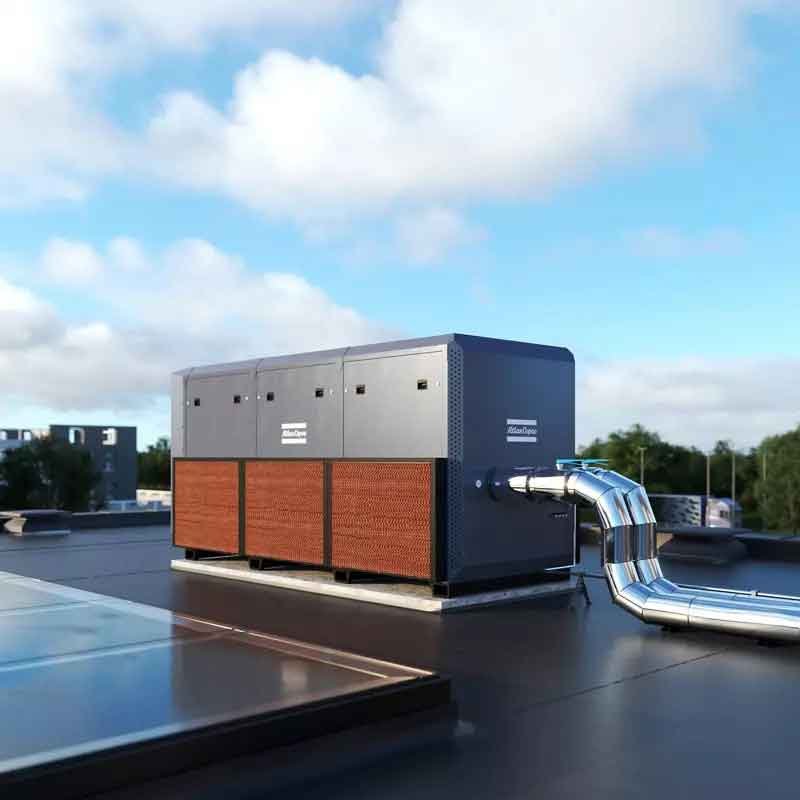
Industrial facilities in the UAE depend on reliable cooling for far more than indoor comfort. Chilled water can be required for manufacturing processes, production equipment, temperature-controlled environments, machinery, warehouses, testing areas and building HVAC systems.
When a permanent chiller is unavailable, undergoing maintenance, being replaced or unable to meet increased demand, renting an industrial chiller can provide temporary cooling capacity without requiring the facility to purchase another permanent unit.
However, choosing the right industrial chiller rental for your UAE facility requires more than selecting the largest chiller available. Cooling capacity, operating temperatures, flow requirements, ambient conditions, power availability, chiller type, installation requirements and technical support all need to be considered.
ASHRAE’s guidance emphasizes accurate cooling-load calculation and warns that unnecessary oversizing can increase equipment and operating costs while creating low-load operating problems.
Why UAE Facilities May Need Industrial Chiller Rentals
Industrial cooling requirements can change for many reasons.
A facility may need temporary cooling when:
A permanent chiller fails
Planned maintenance requires equipment shutdown
An existing chiller is being replaced
Production capacity temporarily increases
Seasonal cooling demand rises
A new production line is being commissioned
A permanent cooling system is delayed
Additional process cooling is required
An emergency cooling contingency is needed
Current industrial rental providers in the UAE also identify emergency breakdowns, planned maintenance, peak demand and bridging the period before permanent equipment installation as common reasons for renting temporary cooling equipment.
For industrial operations, the objective is not simply to restore a comfortable temperature. The temporary system may need to maintain specific process conditions continuously.
1. Start With the Actual Cooling Load
The first step is determining how much cooling the facility actually requires.
Cooling capacity is commonly expressed in refrigeration tons (TR) or kilowatts (kW). The required capacity should be calculated from the actual application rather than selected from a general rule of thumb.
Factors can include:
Process heat
Equipment heat
Building heat gain
Production load
Ambient temperature
Indoor temperature requirements
Chilled-water temperatures
Operating hours
Number of machines connected
Fresh-air requirements
Existing HVAC load
Future production requirements
ASHRAE states that cooling-load size is the largest factor affecting total liquid-chiller ownership cost and recommends accurate load calculations. It also cautions against automatically adding 10–20% to a load estimate because unnecessary oversizing can increase equipment and energy costs.
For an industrial facility, this is particularly important because the cooling load may fluctuate considerably during production.
Don’t Automatically Rent the Largest Available Chiller
A larger chiller is not necessarily a more reliable choice.
If the unit is substantially oversized, it may spend much of its operating time at low load. Depending on the chiller design, this can contribute to inefficient operation or cycling problems.
Conversely, an undersized chiller may not maintain the required process temperature during peak production.
The better approach is to establish the required load and then select equipment capable of meeting that requirement under the facility’s actual operating conditions.
2. Understand What You Are Cooling
Industrial facilities can have very different cooling requirements.
For example, the chiller may be used for:
Process Cooling
Manufacturing equipment may require chilled water to remove heat generated during production.
HVAC Cooling
The temporary chiller may supply chilled water to air-handling units or other building HVAC equipment.
Equipment Cooling
Certain machinery, electrical systems or technical equipment may require controlled cooling.
Temperature-Controlled Production
Food, pharmaceutical, chemical and other manufacturing operations may have specific process-temperature requirements.
The intended application should be clearly explained to the rental provider because a chiller suitable for general HVAC cooling may not necessarily be appropriate for a specialized industrial process.
3. Define Supply and Return Water Temperatures
Before renting equipment, determine the required chilled-water supply and return temperatures.
The rental provider should know:
Required supply-water temperature
Expected return-water temperature
Required temperature difference
Required flow rate
Operating pressure
Required operating hours
These parameters are important because nominal chiller capacity does not tell the entire story.
A chiller’s performance depends on the conditions under which it operates. ASHRAE’s selection guidance emphasizes evaluating capacity and efficiency against the required operating conditions.
For process cooling, the required water temperature can be particularly important. A unit that performs well at a conventional HVAC temperature may not deliver the same capacity at a substantially different leaving-water temperature.
4. Check the UAE Ambient Conditions
Outdoor conditions matter when selecting industrial chillers in the UAE.
This is particularly relevant for air-cooled equipment installed outdoors.
When requesting a quotation, ask the rental provider to confirm:
Rated ambient temperature
Expected capacity at the project’s design ambient
Compressor operating limits
Condenser performance
Expected efficiency at high ambient conditions
Whether the unit is suitable for continuous summer operation
Don’t compare two chillers solely by their advertised TR rating.
A unit’s actual performance under the facility’s operating conditions is more important than the number printed on the equipment specification.
ASHRAE also emphasizes that chiller selection should account for operating conditions and part-load stability rather than relying only on nominal capacity.
5. Choose Between Air-Cooled and Water-Cooled Chillers
The right chiller type depends on the facility and available infrastructure.
Air-Cooled Industrial Chillers
Air-cooled chillers reject heat directly to the surrounding air.
They can be useful for temporary installations where a cooling tower and condenser-water system are unavailable.
Potential advantages include:
Faster deployment
No cooling tower requirement
No condenser-water source
Suitable for outdoor temporary installations
Simpler temporary infrastructure
Current UAE rental offerings position air-cooled chillers as suitable for outdoor and quick-deployment applications.
However, high ambient temperatures can affect air-cooled chiller performance, so the actual UAE operating conditions must be considered.
Water-Cooled Industrial Chillers
Water-cooled chillers reject heat through a condenser-water system.
They can be attractive for large, continuous industrial loads where the facility already has suitable cooling towers, pumps and water infrastructure.
Potential advantages can include strong efficiency for suitable continuous-duty applications.
However, temporary deployment is more complex because additional equipment and water-side infrastructure may be required.
The decision should therefore consider both technical performance and installation practicality.
6. Consider Part-Load Performance
Industrial cooling loads rarely remain exactly the same throughout an entire day or production cycle.
A facility may operate:
- At full production during one shift
- At partial production during another
- With certain machines offline
- At reduced capacity during weekends
- At different loads during startup and shutdown
A chiller should therefore be evaluated for both full-load and part-load operation.
ASHRAE specifically discusses part-load stability in chiller selection and notes that centrifugal chillers, for example, need to be checked for stable operation at reduced loads.
For facilities with highly variable loads, multiple chillers may sometimes provide more flexibility than a single oversized machine.
7. Consider Using Multiple Chillers
For larger industrial applications, a multiple-chiller arrangement can provide operational flexibility.
Instead of depending on one large temporary unit, the facility may use several chillers that can be staged according to demand.
Potential benefits include:
Better capacity matching
Easier maintenance
Additional redundancy
Flexible operation during changing production loads
Ability to remove individual units without losing all cooling capacity
Whether this approach makes sense depends on the facility’s load profile and the consequences of cooling interruption.
For a critical production process, discuss redundancy requirements with the facility engineer and rental provider before finalizing the equipment configuration.
8. Check Electrical Requirements Before Delivery
Industrial chillers can have substantial electrical requirements.
Before renting the equipment, confirm:
Voltage
Phase
Frequency
Full-load current
StartiAvailable site capacity
Protection requirements
Cable requirements
Generator compatibility, if applicable
If the facility uses temporary generator power, the generator should be sized for the complete temporary cooling installation rather than the chiller alone.
The electrical load may include:
Chiller compressors
Condenser fans
Chilled-water pumps
Condenser-water pumps
Cooling-tower fans
Controls
Auxiliary equipment
A chiller that cannot receive adequate electrical power cannot deliver reliable cooling.
9. Check the Existing Pipework
If the temporary chiller will connect to an existing chilled-water system, the connection should be engineered carefully.
Check:
Pipe diameter
Connection size
Flow requirements
Pressure
Supply and return configuration
Isolation valves
Available connection points
Water quality
Temporary bypass requirements
For industrial process applications, also check whether the temporary system needs a dedicated hydraulic loop instead of connecting directly to the existing building HVAC system.
10. Don’t Forget Pumps and Accessories
A rental chiller is only one component of a temporary cooling system.
Depending on the application, you may also require:
Chilled-water pumps
Condenser-water pumps
Flexible hoses
Temporary pipework
Valves
Strainers
Buffer tanks
Expansion equipment
Air-handling units
Cooling towers
Electrical distribution
Controls
Monitoring equipment
Current UAE industrial rental offerings describe temporary cooling solutions that can be connected to existing systems or temporary loops, demonstrating why the complete installation should be considered rather than the chiller alone.
11. Evaluate Energy Efficiency
Rental equipment is temporary, but that does not mean energy efficiency is unimportant.
If an industrial chiller operates continuously for several weeks or months, electricity consumption can become a significant part of the total cost.
ASHRAE recommends considering lifecycle cost when evaluating chiller systems rather than focusing only on the initial equipment cost.
When comparing rental options, ask suppliers for relevant performance information, such as:
Full-load efficiency
Part-load efficiency
Expected power consumption
COP or applicable efficiency metric
Performance at the required chilled-water temperature
Performance at expected ambient conditions
For a long-term rental, a slightly different equipment choice can potentially have a meaningful effect on operating expenditure.
12. Consider Dubai’s Cooling Requirements and Regulations
If the facility is in Dubai and the proposed installation interacts with a district cooling system or provides regulated district cooling services, applicable Dubai requirements need to be considered.
Dubai’s district-cooling framework regulates the provision of district cooling services and includes technical, performance and energy-efficiency requirements. The Dubai Building Code also requires coordination with the relevant district cooling provider where applicable.
This does not mean every industrial chiller rental is a district-cooling service. Rather, the facility owner should determine whether the temporary installation is part of a regulated district-cooling arrangement or simply a temporary private cooling system.
For projects involving existing district cooling infrastructure, coordinate with the relevant provider and authorities before making connections.
13. Look at the Rental Company’s Technical Support
For industrial operations, technical support can be just as important as equipment specifications.
Ask the rental provider:
Is delivery included?
Who installs the equipment?
Is commissioning included?
Is 24/7 technical support available?
What is the emergency response time?
Are spare parts available locally?
Is remote monitoring available?
Is replacement equipment available if the chiller fails?
Who handles preventive maintenance?
Some current industrial cooling rental services offer remote monitoring and emergency-response capabilities, illustrating the importance of service support alongside the equipment itself.
A lower rental price may not represent better value if technical support is limited.
14. Consider the Rental Duration
Your rental period can influence the most practical equipment choice.
Short-Term Rental
For a few days or weeks, fast deployment and simple installation may be the priority.
Medium-Term Rental
For several months, energy consumption, maintenance and reliability become increasingly important.
Long-Term Rental
For extended requirements, the facility should evaluate the total cost of rental, energy, maintenance and installation against other cooling alternatives.
The rental provider should understand the expected duration before recommending the equipment package.
15. Plan for Emergency Cooling
If the industrial facility cannot tolerate an extended cooling interruption, the temporary chiller should be part of a contingency plan.
The plan should identify:
Required emergency capacity
Connection points
Delivery access
Electrical supply
Water connections
Required response time
Critical loads
Temporary hose/pipe routing
Personnel responsible for activating the system
Having an emergency chiller available is only useful if the facility can actually connect and operate it quickly.
16. Compare the Complete Cost
Don’t compare industrial chiller rentals based only on the daily or monthly equipment rate.
The total cost may include:
Chiller rental + delivery + installation + pumps + pipework + electrical work + commissioning + maintenance + energy + dismantling
Ask every supplier to clearly identify what is included.
This makes it easier to compare quotations on a like-for-like basis.
ASHRAE’s lifecycle-cost approach supports evaluating both capital-related and operating considerations when selecting chiller equipment.
Industrial Chiller Rental Checklist
Before signing a rental agreement, confirm:
Required cooling capacity
Actual process or HVAC load
Supply-water temperature
Return-water temperature
Required flow rate
Operating pressure
Ambient operating conditions
Air-cooled or water-cooled configuration
Full-load efficiency
Part-load performance
Electrical requirements
Pump requirements
Pipe and hose requirements
Installation space
Site access
Rental duration
Maintenance arrangements
Emergency response
Backup requirements
Monitoring
Delivery and collection
Total operating cost
Final Thoughts
Choosing the right industrial chiller rental for your UAE facility should start with the cooling requirement-not the equipment available in a supplier’s yard.
Accurate load calculation, appropriate chilled-water temperatures, high-ambient performance, part-load operation, electrical requirements and hydraulic compatibility all affect whether a temporary chiller will actually deliver the required cooling.
ASHRAE’s guidance makes clear that accurate sizing and lifecycle-cost evaluation are central to effective chiller selection.
For UAE facilities, the selection should also account for local operating conditions and, where applicable, Dubai or Abu Dhabi cooling-system requirements.
The best rental solution is ultimately the one that provides the required cooling capacity under real operating conditions, integrates safely with the facility, remains reliable throughout the rental period and delivers acceptable total operating costs.
Before requesting quotations, prepare the facility’s cooling load, chilled-water temperatures, flow requirements, available power, connection details and expected rental period. Providing this information allows suppliers to recommend an industrial chiller based on the actual application rather than simply quoting a nominal capacity.