Portacabins in UAE: Space Layout and Investment Considerations
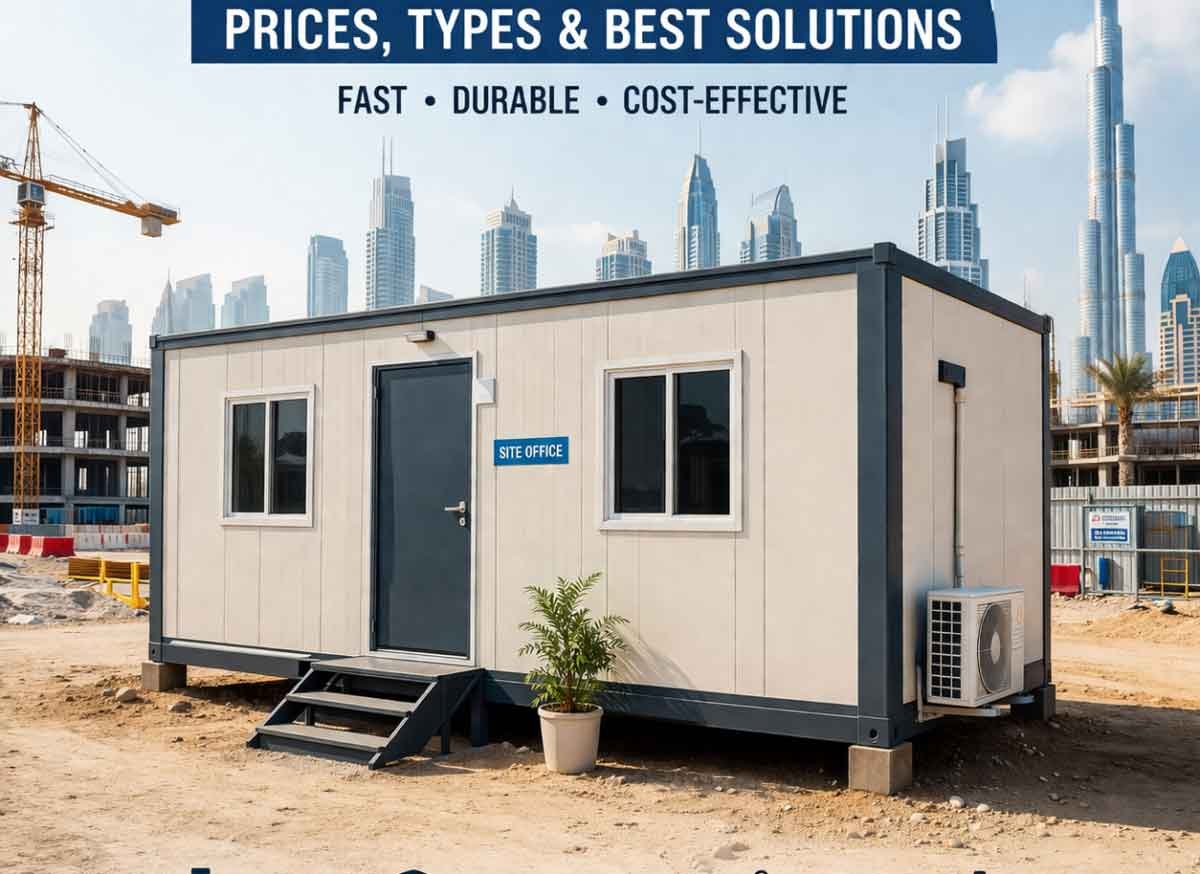
Portacabins have become a practical building solution for businesses, contractors, construction companies, industrial operators, schools, offices, security teams, and project sites across the UAE. Their prefabricated construction can provide usable accommodation without following the same construction process as a conventional building. However, buying a portacabin should not be treated as simply purchasing a ready-made room.
The right decision depends on how much space is required, how the internal layout will be used, whether the structure needs to be single or double storey, what services must be installed, and what local approvals apply to the intended site.
In Dubai, the Dubai Building Code establishes minimum requirements related to health, safety, welfare, environmental impact and sustainable development. The UAE Government also notes that local municipalities are responsible for overseeing building and construction safety and implementing applicable building and fire-safety requirements.
What Are Portacabins?
Portacabins are prefabricated or modular building units manufactured away from the final site and then transported for installation. Depending on the specification, they can be configured as offices, accommodation units, site facilities, security rooms, classrooms, welfare facilities, meeting rooms, storage-related spaces and other approved uses.
The main attraction is flexibility. Instead of constructing every wall and service from scratch on-site, buyers can select a configuration and have the unit delivered and installed according to the project requirements.
However, “prefabricated” does not mean that every portacabin can automatically be placed anywhere and used for any purpose. Dubai regulations distinguish temporary uses and construction works, while specific authorities may impose additional requirements depending on the location and intended use.
Why Space Planning Matters When Buying a Portacabin
The first consideration should be the amount of usable space required rather than simply the external dimensions of the cabin.
A portacabin might need to accommodate:
Workstations and office furniture
Meeting tables
Staff accommodation
Beds and wardrobes
Toilets and washrooms
Pantry areas
Reception space
Storage
Electrical equipment
Air-conditioning equipment
Circulation areas
Doors, windows and access routes
A poorly planned layout can make a relatively large unit feel cramped, while a well-designed layout can make better use of the available floor area.
Before requesting quotations, prepare a basic space schedule. For example, an office project might require separate rooms for management, administration, meetings and reception. A construction site may need offices, welfare facilities and a meeting room. Staff accommodation has completely different space-planning requirements.
Single-Storey vs Double-Storey Portacabins
One of the most important purchasing decisions is whether to install a single-storey arrangement or create additional accommodation through a double-storey configuration.
Single-Storey Portacabins
Single-storey units are generally straightforward when the available site area is sufficient. They can work well for:
Construction-site offices
Security rooms
Small business offices
Meeting rooms
Site welfare facilities
Temporary project facilities
Reception areas
Their biggest advantage is simple horizontal access. There is no upper floor to reach, and the layout can generally be arranged across one level.
However, a single-storey solution requires more ground area if you need a large amount of floor space.
Double-Storey Portacabins
Double-storey portacabin arrangements can provide more usable floor area while occupying less ground space.
For example, where a project requires several offices but has limited available land, adding a second level can increase the total usable floor area without doubling the footprint.
They may be useful for:
Larger construction offices
Project management facilities
Staff facilities
Training rooms
Additional administrative offices
Sites where ground space is limited
The trade-off is that double-storey structures require more detailed planning for structural design, stairs, access, loading, safety and applicable approvals.
Dubai’s building regulations require structural designs to be prepared by qualified engineers and require buildings and structures to satisfy applicable requirements for loads, durability and safety.
Therefore, a double-storey portacabin should not be selected purely because it provides more floor area. The complete structural and regulatory requirements should be considered before purchase.
Designing the Right Portacabin Layout
A good layout starts with the activities that will take place inside the building.
1. Identify the Number of Users
Estimate how many people will regularly occupy the unit. An office for five employees has different requirements from an administrative facility serving 30 or 40 people.
The number of users affects furniture placement, room sizes, circulation, toilets and potentially fire and life-safety considerations.
2. Separate Public and Private Areas
If the portacabin will be used as an office, consider separating areas such as:
Reception
Visitor seating
Management offices
Open-plan workstations
Meeting rooms
Staff facilities
This creates a more functional working environment and reduces unnecessary movement through private areas.
3. Plan Doors and Circulation Early
Doors should not be positioned as an afterthought. Their locations can determine whether furniture fits comfortably and whether people can move efficiently between rooms.
For multi-room layouts, circulation should be considered before finalising room dimensions.
4. Consider Natural Light and Ventilation
Window placement can affect the usability of an office or accommodation unit. Natural light can make interior spaces more comfortable, while ventilation and air-conditioning requirements are particularly important in the UAE climate.
The Dubai Building Code includes requirements and calculation resources relating to areas such as building envelope performance, glazing and air-conditioning systems.
Think About MEP Requirements Before Buying
A portacabin is not simply a steel or panel structure. Electrical, plumbing, sanitary, drainage and air-conditioning requirements can have a major effect on the final specification.
Depending on the intended use, you may need:
Electrical distribution boards
Lighting
Power outlets
Air-conditioning
Plumbing
Toilets
Water supply
Drainage
Fire-safety systems
Data and communication connections
Emergency lighting or other safety equipment
Dubai Municipality specifications for prefabricated portacabin-type buildings demonstrate that completed units can involve foundations, electrical and electromechanical works, sanitary systems, air conditioning, utility connections, doors and windows, and fire-fighting works.
This is why comparing quotations purely on the cabin’s external dimensions can be misleading.
Portacabin Investment: Look Beyond the Purchase Price
The cheapest quotation is not necessarily the cheapest overall solution.
A buyer should evaluate the total installed cost rather than only the advertised unit price.
Potential cost components include:
- Portacabin structure
- Internal partitions
- Flooring and ceiling finishes
- Doors and windows
- Air-conditioning
- Electrical installation
- Plumbing and sanitary systems
- Foundation or supporting works
- Transportation
- Crane or lifting requirements
- Installation
- External stairs for multi-storey units
- Fire-safety provisions
- Utility connections
- Approvals and consultant requirements
- Future modifications or relocation
The final cost can therefore vary significantly from one project to another.
Is Buying a Portacabin a Good Investment?
Whether purchasing a portacabin represents good value depends largely on how long and how intensively it will be used.
Buying can make sense when:
The facility will be used for several years.
The layout is unlikely to change significantly.
The business needs a dedicated facility.
The unit can potentially be relocated or reused.
The buyer wants control over the specification.
Long-term use justifies the initial investment.
For shorter projects, renting may sometimes be more appropriate because it can reduce the upfront capital commitment and avoid ownership responsibilities.
The decision should therefore be based on the expected period of use, future requirements, installation costs and potential reuse rather than purchase price alone.
Check the Structural Specification
Quality should be evaluated through technical specifications rather than appearance.
Ask the supplier for information about:
Structural frame
Steel grade and thickness
Wall and roof construction
Insulation
Flooring
Roof system
Corrosion protection
Doors
Electrical installation
Air-conditioning
Fire-safety provisions
Expected design life
Warranty
Dubai Municipality’s 2024 specification for prefabricated portacabin-type buildings, for example, includes minimum structural requirements and specifies a minimum 15-year structural design life for the complete prefabricated unit covered by that specification. This illustrates why buyers should request documented technical specifications rather than relying on generic claims about durability.
Insulation Is Particularly Important in the UAE
The UAE’s hot climate makes thermal performance an important consideration when selecting a portacabin.
A poorly insulated unit can transfer more heat into the occupied space, increasing the cooling load placed on the air-conditioning system.
When comparing options, ask about:
Wall insulation
Roof insulation
Floor insulation
Window specification
Door sealing
Thermal bridging
Air leakage
Air-conditioning capacity
The Dubai Building Code includes requirements addressing building-envelope performance, insulation and related calculations, so thermal performance should be considered alongside the initial purchase price.
Fire and Life Safety Cannot Be Ignored
Fire safety is another important purchasing consideration.
The applicable requirements depend on the building’s location, occupancy, configuration and intended use. UAE Government guidance states that local municipalities oversee building and construction safety, including applicable fire-protection requirements.
Dubai’s building regulations also require structures to meet applicable safety standards, while the Dubai Building Code contains fire-safety provisions for building elements.
Before purchasing, confirm what fire-safety systems and approvals are required for the specific site and intended use.
Approvals Depend on the Site and Intended Use
One of the biggest mistakes buyers can make is assuming that a portacabin can be installed anywhere simply because it is prefabricated.
Requirements can differ according to:
Emirate
Municipality or authority
Free-zone jurisdiction
Plot classification
Intended use
Building height
Temporary or permanent use
Project duration
Site conditions
For example, Dubai’s regulations identify certain temporary uses, including temporary offices at construction projects, and specify conditions for those uses.
The Dubai Development Authority also provides a Temporary Construction Permit process that can require consultant-stamped drawings, relevant NOCs, soil reports and structural calculations where applicable.
This means buyers should verify requirements with the relevant authority before ordering a unit, particularly for double-storey installations or specialised uses.
Location Can Change the Requirements
A portacabin intended for a construction project in Dubai may face different requirements from one proposed for an industrial facility, free-zone development, school or staff accommodation.
For example, the Ports, Customs and Free Zone Corporation publishes its own rules and regulations for relevant areas and activities. Its environmental, health and safety regulations can impose specific restrictions on portacabin and container use within certain client premises.
Therefore, the supplier should know the intended installation location before finalising the specification.
How to Compare Portacabin Suppliers in the UAE
When comparing suppliers, avoid looking only at the headline price.
Instead, ask each supplier to provide a detailed quotation covering:
Cabin dimensions
Number of rooms
Floor plan
Structural specifications
Insulation specification
Electrical scope
Air-conditioning scope
Plumbing and sanitary scope
Fire-safety scope
Foundation requirements
Transportation
Installation
Crane requirements
Stairs and platforms for double-storey units
Warranty
Delivery period
After-sales support
Any exclusions
This makes it easier to compare quotations on a like-for-like basis.
Questions to Ask Before Buying a Portacabin
Before signing an order, ask:
What will the portacabin be used for?
Office, accommodation, security, classroom and welfare applications can have different requirements.
How many people will use it?
Occupancy affects space planning and facilities.
Do I need one or two storeys?
Choose the configuration according to site area, required floor area and applicable structural requirements.
What is included in the quoted price?
Confirm whether transportation, installation, MEP systems, foundation work and other services are included.
What approvals are required?
Confirm requirements with the relevant municipality, free-zone authority or other competent authority.
What is the expected service life?
Request technical documentation rather than relying on a verbal guarantee.
Can the unit be modified later?
Future partitions, additional rooms, doors, windows or MEP changes should be discussed before purchase.
Common Portacabin Buying Mistakes
Choosing Based Only on Price
A low purchase price may exclude installation, air-conditioning, electrical works, foundations or other essential components.
Ignoring the Layout
A large floor area does not automatically create a functional workspace. Poor positioning of doors, partitions and facilities can reduce usable space.
Buying Without Checking the Site
Access for trucks, cranes and installation equipment should be considered before ordering the unit.
Underestimating Cooling Requirements
In the UAE, insulation and air-conditioning performance are important parts of the overall specification.
Assuming Approval Is Automatic
Prefabricated construction does not remove the need to comply with applicable local requirements.
Choosing a Double-Storey Unit Without Structural Planning
A two-level structure requires appropriate structural design, access and safety considerations. Dubai regulations require structural design to be prepared by appropriately qualified engineers and require structures to meet applicable load and safety requirements.
Final Considerations for UAE Buyers
Buying portacabins in the UAE can be a practical solution when the unit is selected according to the project’s actual requirements. The best choice is not necessarily the largest cabin or the lowest-priced quotation.
Start with the required floor area, number of users and intended activities. Then develop the layout, select the appropriate single- or double-storey configuration, define MEP and fire-safety requirements, evaluate insulation and structural specifications, and confirm the applicable approvals.
Most importantly, compare the total installed investment rather than the basic cabin price. A well-specified portacabin can provide useful, adaptable space, while a poorly specified unit can create additional costs through modifications, inadequate cooling, installation problems or compliance issues.
For buyers looking for portacabins in the UAE, a detailed technical quotation and site-specific assessment are therefore more valuable than a simple price comparison.