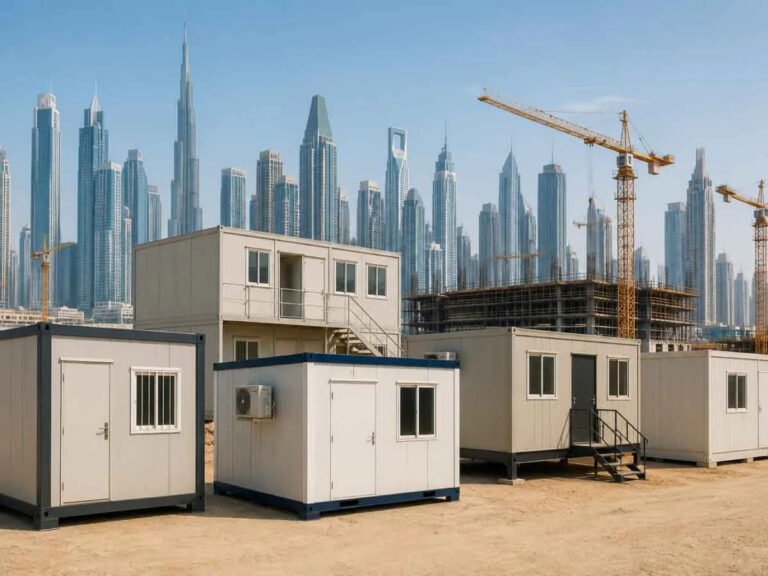
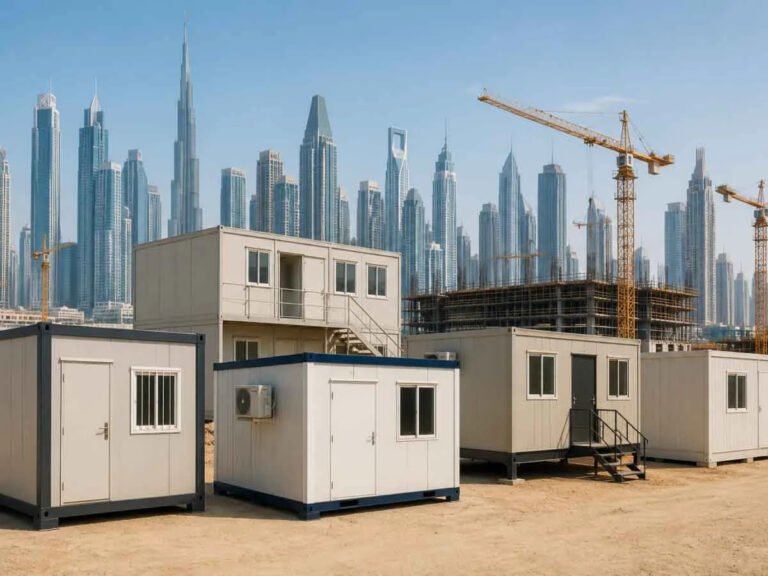
Complete Guide to Buying a Portacabin for Sale in Dubai 2026
If you’ve searched “portacabin for sale Dubai,” you already know the market is crowded – dozens of dealers on Dubizzle, scrap yards reselling used units, and manufacturers out in Sharjah’s industrial areas all claiming to have the best price. What’s harder to find is a straight answer on what you’re actually paying for, what condition to expect, and what paperwork you’ll need before that cabin can legally sit on your site. This guide pulls that together.
Why Portacabins Are Still in Demand in Dubai
Portacabins (also called porta cabins, caravans, or portable cabins in local listings) remain the default solution for site offices, labor accommodation, security cabins, and temporary retail or storage space across the UAE. The appeal hasn’t changed: they’re faster to deploy than permanent construction, relocatable when a project ends, and considerably cheaper per square meter than a brick-and-block structure.
With Dubai’s construction pipeline staying busy into 2026 – new infrastructure, real estate developments, and industrial expansion – demand for both new and used cabins has kept the resale market active, which is good news for buyers because it means healthy competition on price.
New vs. Used Portacabins: What’s the Real Difference
Used Portacabins
Used units dominate a large share of the Dubai market, and for good reason – they’re significantly cheaper and often still in solid working condition. Sellers commonly describe used stock as fully refurbished, with the frame, insulation, and electrical or plumbing systems restored to a usable standard. Listings on marketplaces like Dubizzle show real transacted price ranges for small used units running from roughly depending on size and condition.
When buying used, condition is everything. Reputable dealers recommend checking the cabin’s usage history and asking what repairs or refurbishment were done before you commit, since condition and prior usage directly affect how long the unit will last.
New Portacabins
New units cost more upfront but come with warranty, a fresh fire rating, and no guesswork about internal wear. Pricing scales heavily with specification – one Dubai-based supplier notes that basic new models fully custom builds depending on size, insulation quality, and fit-out level.
If you’re setting up a labor camp, a G+1 (double-stored) site office, or anything with a long operational life, new is usually the safer long-term investment – refurbishing an old unit to today’s fire and safety standards can end up costing nearly as much as buying new anyway.
What Determines the Price
Based on how dealers structure their listings, a handful of factors move the price more than anything else:
Size — measured in square meters or by standard dimensions (a common small cabin size quoted is around 12 x 3.6 meters for a 2-room-plus-kitchen layout)
Fire rating — fire-rated panels cost more than non-fire-rated ones, and are mandatory for labor accommodation and multi-story builds
Frame material — steel frames are the standard for durability, with aluminum used in lighter builds
Insulation — given the UAE’s climate, proper insulation for temperature control is treated as a key spec rather than an optional extra
Internal fit-out — number of rooms, whether a kitchen and toilet are included, electrical wiring, and plumbing
Condition/usage — “never used,” “used once,” and “normal usage” all carry different price tags on resale listings
Types of Portacabins Available in the UAE Market
Dealers in the UAE typically stock a few standard categories:
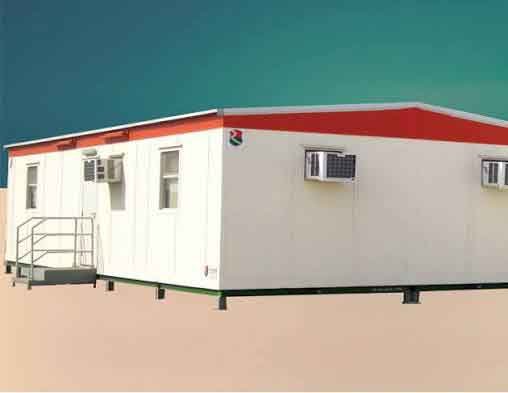
- Jackleg cabins — traditional cabins raised on jacklegs, a long-standing standard type in the market
- Flat pack cabins — designed so multiple units can be joined together to create larger floor space
- Steel anti-vandal cabins — reinforced steel units built for security, commonly used on construction sites
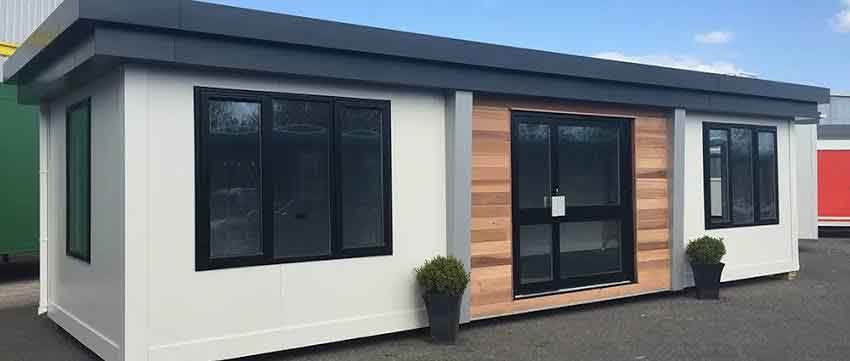
- Modular office units — used across schools, colleges, airports, and even petrochemical and shipbuilding projects where a flexible, cost-effective building solution is needed
- G+1 / double-story cabins — increasingly common on large infrastructure projects where site footprint is limited
- Container conversions — modified shipping containers finished out as offices, security cabins, or retail kiosks
The Legal Side: Permits You Actually Need
This is where most first-time buyers get caught out. A portacabin isn’t exempt from Dubai’s regulatory system just because it’s “temporary” – and skipping approvals is one of the fastest ways to end up with a stop-work order.
Who regulates what depends on where your site sits:
Dubai Municipality enforces structural safety, fire compliance, electrical standards, and sewage regulations for portacabins on Dubai mainland plots, in addition to building permits generally.
Free zone authorities — if your cabin is going up inside a free zone, JAFZA, Tracheas, or TECOM each add their own project-specific approval requirements on top of the municipal baseline.
Tracheas specifically runs a dedicated service called “Approval for Temporary Use of Standard Portacabin Container,” which is the formal route for getting a portacabin authorized within Tracheas-governed areas, alongside its other unified digital building permit services.
MOHRE — if the cabin is being used for worker accommodation rather than an office, the Ministry of Human Resources and Emiratization sets federal worker welfare and accommodation standards that apply across the UAE, on top of the municipal-level rules.
For labor accommodation cabins specifically, there are additional design rules to know before you buy:
Any establishment with more than 50 workers earning under AED 2,000 per month is legally required to provide accommodation.
Accommodation units must be well lit, ventilated, air-conditioned, and provide at least 3 square meters of space per person.
Cabins used for this purpose are now expected to include a bathroom, two toilets, a shower area, a laundry area, and a kitchen under updated rules.
The approval pathway typically starts with submitting design drawings, an NOC from the landowner, and a completed application to the relevant municipality or free zone authority, followed by technical review. Once that clears, you’ll still need separate NOCs – commonly from Civil Defense, DEWA for utilities, and the Department of Planning -before the main permit is issued and the unit can go up on site.
For larger camps, don’t assume one approval covers everything – a camp housing 500 workers may also require a separate environmental permit.
Practical takeaway: before you buy, confirm which authority governs your land – mainland Dubai Municipality versus a free zone – and whether the unit will be used as an office or site cabin versus labor accommodation, since the second triggers a heavier compliance stack. A good dealer will usually help coordinate this, but don’t assume it’s automatically included in the sale price.
Where to Buy: Your Main Options in Dubai
- Dedicated portacabin manufacturers — companies based in industrial areas like Al Sajaa (Sharjah) and Al Quoz (Dubai) that both manufacture and customize new units and often handle labor camp compliance as part of the package.
- Rental-and-sale hybrid dealers — firms that sell new and used stock while also offering short- and long-term rental, useful if you’re not yet sure whether to buy or lease.
- Scrap and resale dealers — specialize in refurbished, pre-owned units at the lower end of the price range; good for short-term projects on tight budgets.
- Online marketplaces — Dubizzle and similar classifieds list individual sellers and small dealers directly, which is where you’ll find the widest spread of real, current asking prices – but buyer due diligence is entirely on you here.
A Practical Buyer’s Checklist
Confirm whether you need new or can work with a well-refurbished used unit
Get the fire rating certificate in writing – don’t take a verbal assurance
Ask for the frame material (steel vs. aluminum) and insulation spec
Inspect electrical and plumbing systems in person, or have someone do it for you, before transfer
Identify which authority governs your plot (Dubai Municipality vs. Tracheas/JAFZA/TECOM)
If it’s for worker housing, check the per-person space, ventilation, and required facility list against MOHRE rules
Get a written quote that separates unit cost, delivery, installation, and any permit-handling services
Ask about warranty terms on new units, and refurbishment history on used ones
Compare at least three dealers – new and used prices in this market vary widely for near-identical specs
Final Thoughts
Buying a portacabin in Dubai in 2026 is straightforward once you separate the two things that actually matter: getting the right physical unit for your budget and use case and lining up the correct approvals for where it’s going. The unit itself is the easy part – prices are transparent and competitive across a large dealer network. The permitting side is where projects lose time, particularly for labor accommodation, where MOHRE standards and municipal or free-zone NOCs stack on top of each other. Sort that out before you sign for the cabin, not after it’s delivered to site.