What to Consider Before Renting a Chiller in the UAE
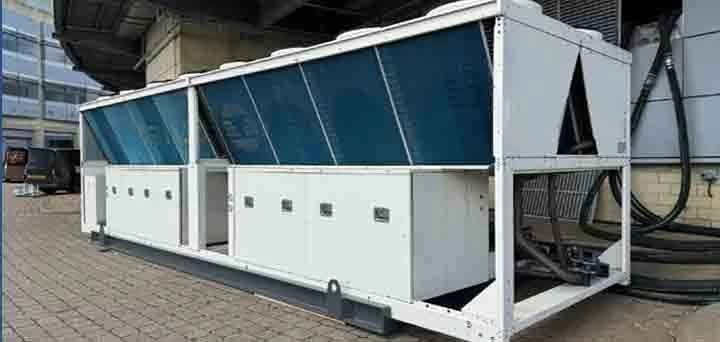
Chiller rental can be a practical solution when a building, industrial facility, construction project, event venue, data centre, or commercial property needs temporary or additional cooling capacity. Instead of purchasing a permanent chiller, businesses can rent equipment for a specific period and scale their cooling capacity according to project requirements.
However, choosing a rental chiller is not simply a matter of selecting the available machine with the highest cooling capacity. The chiller needs to match the actual cooling load, chilled-water requirements, site conditions, available power, operating schedule, and the existing HVAC system.
This is particularly important in the UAE, where cooling demand can be substantial because of the hot climate. ASHRAE notes that chilled-water plant design has a major effect on energy consumption and operating costs and recommends considering both peak loads and the way cooling demand changes over time when selecting chillers.
1. Determine Your Actual Cooling Requirement
The first step before renting a chiller is to establish how much cooling capacity your project actually needs.
Chillers are commonly rated in refrigeration tons (TR), kW of cooling capacity, or similar capacity units. The required capacity depends on factors such as:
Building or process size
Indoor and outdoor temperatures
Number of occupants
Equipment and machinery
Heat generated by lighting
Required indoor temperature
Process cooling requirements
Existing HVAC equipment
Operating hours
Expected peak cooling demand
Avoid choosing a chiller simply because a larger capacity appears safer. Oversizing can affect efficiency and operating costs, while insufficient capacity may leave the facility unable to maintain the required temperature.
ASHRAE’s guidance on chilled-water plants specifically highlights the importance of understanding both peak cooling loads and annual or hourly load profiles when selecting plant capacity.
2. Understand Why the Chiller Is Needed
Before contacting a rental company, identify the reason for the temporary cooling requirement.
Common applications include:
Emergency Cooling
A temporary chiller can provide cooling when an existing chiller fails or requires major repair.
Planned Maintenance
Businesses may rent equipment while their permanent cooling system is shut down for maintenance or replacement.
Construction Projects
New buildings may require temporary cooling during construction, testing, commissioning, or phased occupation.
Industrial Cooling
Manufacturing facilities may require chilled water for processes, machinery, production areas, or temperature-sensitive operations.
Events and Temporary Venues
Temporary venues, exhibitions and large events may require additional cooling capacity for a limited period.
Additional Cooling Capacity
A facility may experience a temporary increase in cooling demand during expansion, seasonal peaks, or changes in production.
Knowing the application helps determine the appropriate chiller type, capacity, temperature range and accessories.
3. Check the Required Chilled-Water Temperature
Cooling capacity alone does not tell you whether a particular chiller is suitable.
You should establish:
Required chilled-water supply temperature
Expected return-water temperature
Required temperature difference (Delta T)
Required water flow
Operating pressure
Process requirements, if applicable
ASHRAE states that conventional chilled-water supply temperatures are commonly around 5–7°C, although the appropriate temperature depends on the application and system design. It also explains that chilled-water supply and return temperatures influence pumping requirements and system efficiency.
For this reason, provide the rental company with your existing system’s design conditions instead of asking only for a particular tonnage.
4. Check the Available Power Supply
The rental chiller must be compatible with the electrical supply available at the site.
Before installation, confirm:
Voltage
Phase
Frequency
Connected electrical load
Starting requirements
Generator availability
Distribution equipment
Cable requirements
This becomes especially important for temporary projects where the site may not have enough electrical capacity for a large chiller.
If the site cannot provide the required electrical power, a generator may need to be incorporated into the temporary cooling solution. The electrical requirements should be established before delivery so that equipment, cabling and distribution can be properly planned.
5. Decide Between Air-Cooled and Water-Cooled Chillers
The operating environment can influence which chiller configuration is appropriate.
Air-Cooled Chiller
Air-cooled chillers reject heat directly to the surrounding air. They can be attractive for temporary applications because they generally do not require a cooling tower and associated condenser-water infrastructure.
They may be suitable where:
Installation needs to be relatively straightforward
Water availability is limited
The site is temporary
A cooling tower is impractical
Water-Cooled Chiller
Water-cooled systems reject heat through condenser water and typically require additional equipment such as cooling towers, pumps and associated piping.
They can be appropriate for larger installations where the necessary infrastructure is available.
The choice should therefore be based on the site’s requirements rather than assuming that one chiller type is always better.
6. Consider UAE Weather Conditions
A chiller operating in the UAE may face demanding outdoor conditions, particularly during periods of high ambient temperature.
When requesting a quotation, provide the supplier with the actual site location and operating conditions. Ask whether the proposed chiller’s rated performance is appropriate for the expected ambient temperature.
This is particularly relevant to air-cooled equipment because condenser performance is directly affected by outdoor conditions.
A chiller that provides a particular cooling capacity under one set of conditions may perform differently under another set of operating conditions. Therefore, the supplier should confirm the expected capacity under the project’s actual design conditions.
7. Check the Chiller’s Efficiency
Rental equipment still consumes energy, so efficiency should be considered alongside rental price.
ASHRAE explains that chiller selection should consider life-cycle costs rather than focusing solely on initial equipment cost. Its guidance also discusses the relationship between cooling load, chiller efficiency, pumps and other components of a chilled-water plant.
When comparing rental chillers, ask for relevant performance information such as:
COP
kW/TR where applicable
Rated cooling capacity
Performance at expected operating conditions
Part-load performance
Electrical consumption
A machine with a slightly higher rental price could potentially be more economical if it operates more efficiently under the project’s actual load.
8. Don’t Ignore Part-Load Performance
A chiller rarely operates at exactly 100% capacity throughout the rental period.
Cooling requirements can change depending on:
Time of day
Weather
Occupancy
Production schedules
Equipment operation
Building usage
ASHRAE notes that many refrigeration systems operate below full load for much of their operating time and that equipment performance can vary significantly at part load.
Therefore, ask the rental provider how the selected chiller performs at the expected operating range rather than looking only at its maximum capacity.
9. Check Flow Rate and Piping Requirements
A rental chiller needs more than a refrigeration machine. It must be connected properly to the cooling system.
Confirm:
Chilled-water flow rate
Supply and return pipe sizes
Connection sizes
Operating pressure
Pump requirements
Flexible hoses or temporary piping
Valves
Strainers
Water treatment requirements
Drainage arrangements
ASHRAE’s chilled-water plant guidance identifies piping layouts, chilled-water distribution and pump selection as important elements of system design.
If the rental chiller is being connected to an existing HVAC system, the compatibility of the temporary equipment with the existing system should be checked before installation.
10. Ask What Equipment Is Included
One of the biggest mistakes when renting a chiller is comparing only the advertised chiller rental rate.
A temporary cooling system may also require:
Chilled-water pumps
Hoses
Temporary piping
Cooling towers for certain water-cooled systems
Control panels
Electrical cables
Heat exchangers
Buffer tanks
Water-treatment equipment
Fuel-powered generators where required
Installation equipment
Ask the rental company for a complete scope of supply.
A quotation that appears cheaper may exclude equipment that another supplier has already included.
11. Check Installation and Commissioning
The rental company should clearly explain how the equipment will be installed and commissioned.
Ask:
Who delivers the chiller?
Who positions the equipment?
Who connects the piping?
Who connects electrical supplies?
Who performs commissioning?
Who tests chilled-water flow?
Who verifies operating temperatures?
Who remains responsible after start-up?
Commissioning is important because the chiller needs to operate according to the project’s intended conditions. ASHRAE identifies commissioning as an important part of ensuring that chilled-water plants meet their design intent.
12. Consider the Available Space
Temporary chillers can require significant space, particularly when additional pumps, generators, cooling towers or piping are involved.
Before delivery, check:
Equipment footprint
Access roads
Crane access
Service clearance
Ventilation requirements
Piping routes
Electrical connection location
Noise considerations
Drainage
For an air-cooled chiller, sufficient clearance around the equipment is particularly important because the machine needs to reject heat into the surrounding air.
13. Consider Noise and Location
Noise may become an important issue if the temporary chiller is located close to offices, residential areas, hospitals, hotels or event spaces.
Ask the supplier about:
Expected sound levels
Equipment location
Operating hours
Noise-control options
Distance from occupied areas
A technically suitable chiller may still create practical problems if it is installed in an unsuitable location.
14. Ask About Maintenance and Technical Support
Temporary cooling equipment needs regular monitoring during the rental period.
Before signing the agreement, clarify:
Preventive maintenance
Emergency breakdown response
Technician availability
Replacement equipment
Routine inspections
Cleaning
Refrigerant-related service
Pump maintenance
Operating support
ASHRAE’s controls guidance notes that equipment malfunction, poor maintenance and inappropriate operation can cause chilled-water plants to perform differently from their intended operation. Ongoing performance monitoring can help identify problems.
For critical facilities, 24/7 technical support may be more important than saving a small amount on the rental rate.
15. Have a Backup Plan for Critical Cooling
If cooling is essential to production, data processing, storage or another critical operation, consider what happens if the rented chiller fails.
Depending on the application, you might need:
Standby chiller capacity
Multiple smaller chillers
Spare pumps
Emergency generator capacity
Rapid replacement arrangements
Using several chillers instead of one large machine can sometimes provide operational flexibility because part of the system can continue operating if one unit becomes unavailable.
The appropriate redundancy level depends on how critical the cooling load is and how much downtime the business can tolerate.
16. Check Water Quality and Treatment
Chilled-water systems depend on suitable water conditions.
Depending on the system, poor water quality can contribute to corrosion, scaling or other operational problems.
Before installation, establish:
Water quality requirements
Chemical treatment
Filtration
Cleaning
Water replacement
Responsibility for treatment
If the system uses cooling towers, water treatment becomes an even more important consideration because the condenser-water side introduces additional water-management requirements.
17. Understand the Rental Agreement
The contract should clearly state what is included in the rental.
Review:
Rental period
Delivery date
Collection date
Installation charges
Removal charges
Transportation
Equipment rental rate
Additional equipment
Electricity or fuel responsibility
Maintenance
Breakdown response
Damage responsibility
Extension charges
Deposit
Insurance requirements
Don’t assume that delivery, installation and technical support are automatically included.
18. Check Local Requirements and Site Approvals
Requirements for cooling equipment can depend on the project location, site owner, development and nature of the installation.
Dubai’s regulatory framework, for example, contains specific requirements for district cooling systems and identifies technical and safety requirements associated with cooling infrastructure. These rules concern district cooling services rather than every temporary chiller rental, but they demonstrate why cooling installations should be assessed according to the applicable regulatory framework rather than treated as identical projects.
For a temporary installation, check with the relevant site management, consultant or authority where applicable to determine whether permits, approvals, drawings or safety documentation are required.
19. Compare the Total Cost, Not Just the Rental Rate
The actual cost of temporary cooling can include much more than the chiller itself.
A useful comparison should consider:
| Cost Factor | What to Check |
|---|---|
| Chiller rental | Daily, weekly or monthly rate |
| Delivery | Transportation to the site |
| Installation | Labour and connection costs |
| Piping | Hoses, pipes and fittings |
| Pumps | Included or additional |
| Power | Electricity or generator |
| Fuel | If generator-powered |
| Maintenance | Routine and emergency service |
| Removal | Dismantling and collection |
| Extension | Additional rental period |
| Deposit | Refundable or non-refundable charges |
This gives you a clearer picture of the actual project cost.
Questions to Ask a Chiller Rental Company
Before signing a rental agreement, ask the supplier:
- What cooling capacity will the chiller provide at my required operating conditions?
- What chilled-water supply and return temperatures are required?
- What water flow rate is needed?
- Is the unit air-cooled or water-cooled?
- What electrical supply does it require?
- Are pumps included?
- Is temporary piping included?
- Is installation included?
- Is commissioning included?
- What maintenance is provided?
- How quickly can technicians respond to a breakdown?
- Is standby equipment available?
- What happens if the rental period needs to be extended?
- What are the delivery and removal arrangements?
- Are any site approvals or safety documents required?
Getting these answers in writing makes supplier comparisons much easier.
When Is Chiller Rental a Better Option Than Buying?
Rental can make sense when the cooling requirement is temporary, uncertain or unusually high.
Examples include:
Emergency chiller failure
Planned maintenance
Temporary construction projects
Seasonal cooling requirements
Industrial shutdowns
Temporary production increases
Events
Building expansion
Commissioning and testing
Additional capacity during peak demand
Purchasing may be more appropriate when a facility has a long-term, predictable cooling requirement and the economics support owning the equipment.
The decision should therefore consider the expected duration of use, capital expenditure, maintenance, energy consumption, available space and future cooling requirements.
Final Checklist Before Renting a Chiller in the UAE
Before placing an order, make sure you have confirmed:
Required cooling capacity
Peak and expected operating load
Chilled-water supply temperature
Return-water temperature
Required flow rate
Air-cooled or water-cooled configuration
UAE ambient operating conditions
Electrical requirements
Pump requirements
Piping and hose requirements
Installation requirements
Available site space
Noise considerations
Water-treatment requirements
Maintenance support
Emergency response
Backup capacity
Rental duration
Delivery and collection
Applicable site approvals
Total rental cost
Conclusion
Renting a chiller in the UAE can provide valuable temporary cooling capacity without the capital commitment of purchasing permanent equipment. But the success of the rental depends on selecting equipment that actually matches the project’s cooling and operating requirements.
The most important considerations are cooling load, chilled-water temperatures, flow rate, equipment type, ambient conditions, electrical supply, installation, piping, efficiency, maintenance and technical support.
Rather than choosing a rental chiller based only on its advertised tonnage or monthly price, provide the rental company with detailed information about your project and compare complete technical and commercial proposals. ASHRAE’s guidance supports this broader approach by emphasising cooling-load analysis, equipment selection, distribution systems, efficiency and life-cycle considerations when designing chilled-water systems.
For critical applications, also consider redundancy and emergency support. A properly selected and professionally installed rental chiller can provide reliable temporary cooling while reducing the disruption associated with equipment failure, maintenance, expansion or short-term increases in cooling demand.