A sudden power failure can create serious operational problems for businesses, hospitals, data centres, warehouses and industrial facilities in Dubai. While a short interruption may affect normal business activities, an extended outage can put critical equipment, temperature-sensitive products, communication systems and essential safety services at risk.
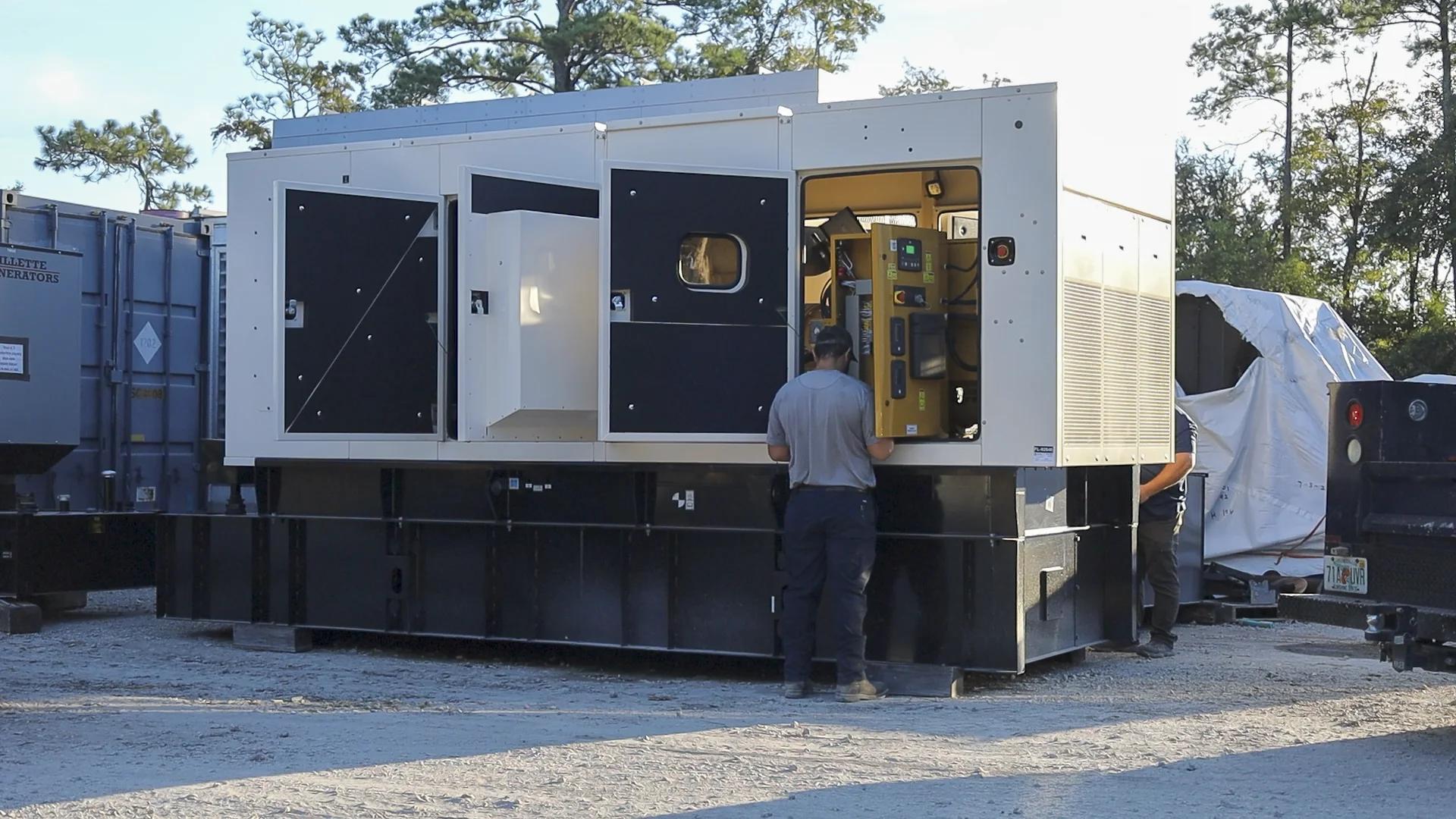
For facilities that cannot afford unexpected downtime, emergency generator hire in Dubai provides a practical way to restore temporary electricity while the main power supply is being repaired or maintained. A properly selected diesel generator, supported by suitable electrical distribution equipment, automatic transfer systems and fuel management, can help maintain essential operations during an outage.
Emergency generator deployment involves more than transporting a generator to a site. It requires an assessment of the electrical load, cable routes, equipment access, connection arrangements and operating requirements. Hospitals, data centres and cold storage facilities may also need dedicated arrangements to protect their most critical loads.
This guide explains how emergency generator hire works in Dubai, how a rapid two-hour mobilization target can be organised, and what businesses should consider when integrating temporary generators with existing electrical infrastructure.
Why Emergency Generator Hire Is Important for Critical Infrastructure in Dubai
Not every facility can respond to a power outage in the same way. Some businesses can temporarily stop operations, while others must maintain electricity continuously to protect people, equipment and valuable inventory.
Emergency generator hire is particularly important for the following sectors.
1. Hospitals and Healthcare Facilities
Hospitals require reliable electricity for critical medical equipment, operating theatres, intensive care units, emergency departments, patient monitoring systems and essential building services.
A generator used for emergency healthcare applications must be correctly sized and connected to the appropriate emergency distribution system. Simply placing a diesel generator outside a hospital does not guarantee that critical medical equipment will receive power.
The Dubai Health Authority's Health Facility Guidelines, Part E, explain that secondary power supplies must provide electricity to associated emergency loads within 15 seconds or less following interruption of the primary supply. The guidelines also identify the importance of UPS systems for certain clinical applications requiring an even shorter interruption period.
For temporary generator deployment, hospital engineering teams should establish:
Which medical and life-safety loads require emergency power.
Whether an existing generator has failed or requires additional capacity.
Whether the facility has temporary generator connection points.
Whether existing ATS equipment can accept the temporary supply.
Whether UPS systems will maintain uninterrupted power during generator starting and transfer.
The DHA guidelines also identify temporary generator connection provisions and bypass-isolation ATS arrangements for critical healthcare applications.
2. Data Centres and IT Infrastructure
Data centres depend on continuous electricity to operate servers, storage systems, network switches, security equipment and cooling infrastructure.
Even a short interruption can affect applications, communication services and business transactions. If cooling systems stop working, equipment temperatures can also rise, creating additional operational risks.
An emergency generator can support the facility's electrical distribution system while the main utility supply is unavailable. However, generator power should be considered part of a wider continuity arrangement that includes UPS systems, electrical protection and appropriate redundancy.
Before deployment, the engineering team should identify:
Total IT and mechanical loads.
Server rack power requirements.
UPS capacity and remaining battery autonomy.
Cooling system starting currents.
Required generator redundancy.
Available connection points and cable routes.
The UAE's National Standard for Business Continuity Management also highlights the importance of restoring technology systems, including hardware, networks, applications and data, following operational disruption.
For data centres, the objective of 24/7 power backup Dubai services should be to protect both computing equipment and the supporting infrastructure required to keep it operational.
3. Cold Storage and Refrigerated Warehouses
Cold storage facilities require continuous refrigeration to preserve food, pharmaceuticals and other temperature-sensitive products.
A power failure can interrupt compressors, evaporator fans, refrigeration controls and temperature monitoring equipment. If the outage continues, stored products may be exposed to temperatures outside their required storage conditions.
Emergency generator hire allows warehouse operators to restore electricity to essential refrigeration equipment without waiting for permanent electrical repairs.
The generator capacity should be calculated using actual refrigeration loads rather than simply adding the running wattage of individual machines. Compressor starting currents, simultaneous operation, defrost cycles and auxiliary equipment must also be considered.
A suitable temporary power arrangement should prioritise:
Refrigeration compressors and condensing units.
Evaporator fans and circulation systems.
Temperature monitoring and alarm equipment.
Essential warehouse lighting and security.
Control panels and communication systems.
The facility should also monitor product temperatures before, during and after the transfer to generator power. This helps warehouse managers identify any temperature excursions and take appropriate action.
The Two-Hour Generator Mobilization Workflow in Dubai
During an emergency, response time is important, but an incorrectly sized or poorly connected generator can create additional problems.
A practical two-hour mobilization target requires coordination between the rental provider, site management, electrical engineers and transport teams. It should be treated as a site-specific operational target rather than an unconditional guarantee because equipment availability, access restrictions, crane requirements and electrical approvals can affect the final timeline.
Rental Power UAE promotes emergency dispatch and rapid mobilization services, with published response information covering approximately 60–120 minutes in its service offering.
The following workflow explains how rapid generator mobilization can be organised.
Stage 1: Emergency Call and Initial Load Assessment
The process begins when the facility contacts the emergency generator provider.
The operations team collects the information required to identify an appropriate generator and prepare the deployment.
Important details include:
Site location and access arrangements.
Generator capacity required in kVA.
Operating voltage, frequency and phase.
Total connected load and essential loads.
Existing electrical distribution arrangements.
Required backup duration.
Availability of ATS or AMF panels.
For example, a warehouse requiring temporary refrigeration backup may need a different generator configuration from a hospital or commercial data centre.
Where possible, the facility should provide its single-line diagram, generator specifications and electrical load schedule before dispatch.
Stage 2: Site Technical Survey and Cable Run Calculation
A technical survey helps identify installation requirements before equipment reaches the site.
The engineering team checks the proposed generator position, electrical connection point, cable routing, ventilation, exhaust discharge and safe operating clearances.
Cable run calculation is especially important because temporary generators are sometimes positioned a considerable distance from the building's main distribution board.
Cable sizing should consider:
Generator output current.
Cable length and permissible voltage drop.
Installation method and ambient temperature.
Cable grouping and thermal derating.
Short-circuit withstand capacity.
Earthing and protective device coordination.
For example, a generator connected through an undersized cable may experience excessive voltage drop, overheating or unreliable operation when larger loads start.
The survey should also establish whether cables need to pass through designated service routes, protected trenches or temporary cable ramps.
Stage 3: Generator Dispatch and Crane Offloading
Once the technical requirements and access arrangements are confirmed, the appropriate generator is prepared for transportation.
Depending on the required capacity, the equipment may be delivered using a suitable flatbed vehicle, trailer or crane-equipped transport arrangement.
Crane offloading may be necessary where generators need to be positioned in restricted service areas or where direct vehicle access is unavailable.
Before lifting, the team should confirm:
Generator operating and lifting weight.
Approved lifting points.
Crane capacity and lifting radius.
Ground-bearing capacity.
Overhead obstructions and nearby structures.
Exclusion zones and safe lifting arrangements.
A suitable installation position must also allow sufficient airflow, safe exhaust discharge, maintenance access and protection from vehicle movement.
Stage 4: Electrical Connection and Commissioning
After offloading, qualified technicians position the generator and complete the electrical installation.
This typically includes connecting the power cables, checking earthing arrangements, verifying phase sequence and confirming that protection settings are appropriate.
The team should also inspect the fuel system, engine oil, coolant, batteries and control panel before starting the generator.
Commissioning should include:
Checking electrical connections and mechanical condition.
Starting the generator without load.
Confirming voltage and frequency stability.
Testing the transfer arrangement.
Applying the agreed electrical load.
Monitoring engine parameters and load distribution.
The temporary power system should only be handed over after the authorised site electrical personnel have confirmed that the installation is safe and suitable for operation.
Important: A two-hour response target should distinguish between arrival at site, completed installation and actual load acceptance. These are separate milestones.
Automatic Transfer Switch Hire and AMF Panel Integration
One of the most important considerations during emergency generator deployment is how electricity will transfer from the main utility supply to the temporary generator.
An Automatic Transfer Switch (ATS) and an Automatic Mains Failure (AMF) control arrangement can help automate this process when correctly designed and integrated.
How an AMF Panel Works
An AMF panel monitors the incoming mains electricity supply.
When it detects a qualifying power failure, it initiates the generator starting sequence. Once the generator reaches the required voltage and frequency, the transfer equipment switches the designated electrical load to the generator supply.
When utility power returns and remains stable for the configured period, the system transfers the load back to the mains. The generator then completes its cooling-down sequence before stopping.
A typical automatic sequence involves:
Mains supply monitoring.
Detection of mains failure.
Automatic generator start command.
Generator voltage and frequency verification.
Transfer of the designated load.
Monitoring of generator operation.
Restoration of the mains supply.
Return transfer and generator cooldown.
The operation depends on the control panel configuration, generator controller, interlocking arrangements and site electrical design.
When Automatic Transfer Switch Hire Is Required
Automatic transfer switch hire can be useful when a facility needs an automated changeover arrangement but does not have a suitable available transfer panel.
It may also be required when an existing ATS is damaged, undergoing maintenance or incompatible with the temporary generator arrangement.
Before supplying an ATS, engineers should confirm:
Rated current and voltage.
Number of phases and poles.
Short-circuit withstand rating.
Mains and generator sensing requirements.
Breaker interlocking.
Control wiring compatibility.
Load transfer and restoration sequence.
An incorrectly selected transfer switch can create serious electrical risks. In particular, the system must prevent unintended simultaneous connection of utility and generator supplies unless an approved synchronising and paralleling arrangement has specifically been engineered.
Integration with Building Management Systems
Large commercial buildings, hospitals, hotels and industrial facilities often use a Building Management System (BMS) to monitor electrical and mechanical services.
A temporary generator can be integrated into the existing monitoring arrangement where the generator controller, ATS and BMS support compatible communication interfaces.
Depending on the equipment, this may involve:
Volt-free or dry-contact signals.
Modbus RTU or Modbus TCP communication.
Generator running and available status.
Mains failure and generator fault alarms.
Low fuel level warnings.
Voltage and frequency monitoring.
Generator load and operating hours.
The BMS can display these signals on the building operator's monitoring interface, allowing maintenance teams to identify operating conditions and respond to faults.
However, BMS monitoring and electrical load transfer are two different functions. The BMS does not automatically replace the ATS or the generator's dedicated protection and control systems.
A proper integration plan should identify the required communication points, confirm compatibility and test the alarms during commissioning.
Fuel Tank Bunding and Environmental Spill Prevention in Dubai
Fuel management is another important part of emergency generator hire. A generator may need to operate for several hours or days while utility electricity is unavailable. This makes safe diesel storage, refuelling and spill prevention essential.
Diesel leakage can contaminate surrounding surfaces, enter drainage systems and create fire and environmental hazards. Temporary fuel tanks should therefore be installed with appropriate containment and protection measures.
What Is Fuel Tank Bunding?
Fuel tank bunding is a secondary containment arrangement designed to collect diesel if the primary fuel tank leaks, overflows or becomes damaged.
Instead of allowing spilled fuel to spread across the installation area, the bund provides a controlled containment space.
For emergency generator installations, suitable arrangements may include:
Double-walled diesel storage tanks.
Dedicated bunded fuel tanks.
Impermeable containment surfaces.
Protected fuel filling and transfer connections.
Appropriate spill response equipment.
Clearly identified fuel storage areas.
These measures help reduce the possibility of diesel reaching surrounding soil, groundwater or drainage systems.
Dubai Municipality Environmental Considerations
Dubai Municipality publishes environmental sustainability technical guidelines that establish environmental requirements and standards for relevant activities across the Emirate. Businesses and service providers must consider the applicable requirements when arranging temporary fuel storage and generator installations.
The practical environmental precautions for temporary generator installations should include:
Secondary containment: Fuel storage should have an appropriate bunding or double-wall containment arrangement to control accidental leakage.
Impermeable surfaces: The containment system should prevent spilled diesel from entering the ground or surrounding drainage infrastructure.
Drainage protection: Fuel storage areas should be positioned and managed to prevent accidental discharge into stormwater drains.
Spill response: Suitable spill kits and emergency response procedures should be available near fuel storage and refuelling points.
Controlled refuelling: Fuel transfer should be supervised, with connections and hoses checked for leakage.
Regular inspections: Tanks, fuel lines, valves and containment areas should be inspected during generator operation.
The UAE's published fuel storage regulations also provide useful technical guidance on secondary containment, including impermeable construction, controlled drainage and preventing fuel from reaching groundwater or surrounding land.
For additional reference, RAKEZ's health and safety regulations specifically discuss bunded diesel storage and spill prevention during fuel storage and filling operations.
It is important not to assume that one universal bund capacity applies to every temporary generator installation in Dubai. The applicable requirement must be confirmed against the relevant authority, site conditions, storage arrangement and project approvals.
Fuel Supply During Extended Power Outages
An emergency generator is only useful while it has an adequate supply of diesel.
Fuel consumption depends on generator capacity, electrical loading, engine efficiency and operating conditions. Therefore, the fuel requirement should be calculated using the expected load profile rather than relying on the generator's tank size alone.
For extended deployments, the rental arrangement should include:
Initial fuel availability.
Estimated daily consumption.
Fuel-level monitoring.
Planned refuelling intervals.
Emergency diesel delivery arrangements.
Inspection of tanks and fuel connections.
For hospitals, cold storage warehouses and data centres, fuel planning should also consider the time required to arrange replenishment during an extended outage.
Selecting the Right Generator for Emergency Backup
Selecting the correct generator capacity is essential for reliable operation.
A generator that is too small may struggle when heavy equipment starts. An unnecessarily large generator may also operate inefficiently when the actual electrical demand is low.
The selection process should begin with an electrical load assessment.
Understanding Generator Capacity
Generator capacity is generally specified in kVA. The required rating depends on the total electrical demand, power factor, motor starting requirements and operating conditions.
For example, a facility with substantial refrigeration compressors may require additional starting capacity compared with a building operating mostly lighting and office equipment.
Engineers should assess:
Total running load.
Motor starting and inrush currents.
Power factor.
Load variation throughout the day.
Required operating duration.
Generator redundancy.
Site temperature and ventilation conditions.
Rental Power UAE lists generator rental equipment covering a broad range of capacities, including commercial and industrial applications. Its published service information includes generators from 20 kVA to 2500 kVA.
Why Generator Load Testing Matters
A generator should be inspected and tested before deployment.
Load-bank testing is one method used to evaluate generator performance under controlled electrical loads. It can help identify issues involving voltage regulation, frequency stability, cooling performance and engine operation.
For emergency applications, the rental provider should be able to explain the generator's condition, available test records and maintenance history.
This is particularly important when the generator will support critical equipment that cannot tolerate unreliable power.
Why Businesses Need 24/7 Power Backup Dubai Services
Power interruptions do not always happen during normal business hours. An outage can occur overnight, during weekends or when a facility is operating with limited maintenance staff.
Businesses therefore need access to technical support beyond standard working hours.
Reliable 24/7 power backup Dubai services should include more than emergency equipment delivery. They should also cover installation, commissioning, monitoring, refuelling and maintenance.
A suitable emergency rental arrangement can provide:
Round-the-clock technical assistance.
Access to suitable generator capacity.
Emergency transport and installation.
Electrical cables and distribution equipment.
Automatic transfer equipment where required.
Fuel management and replenishment.
Preventive maintenance.
Emergency replacement support, subject to availability and contract terms.
A complete service arrangement reduces the need for businesses to coordinate multiple suppliers during an already difficult situation.
Why Choose Rental Power for Emergency Generator Hire in Dubai?
Rental Power UAE provides temporary power solutions for commercial, industrial and infrastructure applications across Dubai and other UAE locations.
Its generator rental services cover different capacity requirements, with supporting equipment and technical assistance for temporary power installations.
The company's published service information highlights several capabilities relevant to emergency generator deployment:
Diesel generators ranging from 20 kVA to 2500 kVA.
Acoustic-canopied generator options.
Emergency dispatch and technical support.
Temporary power distribution and cabling.
ATS and generator integration.
Bunded fuel storage arrangements.
Fuel supply and replenishment support.
Generator maintenance and operational monitoring.
Businesses requiring temporary electricity can explore generator rental in Dubai to discuss their generator capacity and site requirements.
For urgent power requirements, contacting the technical team with the site location, required capacity and nature of the electrical failure can help speed up the initial assessment.
You can reach the team through its emergency generator hotline.
Frequently Asked Questions About Emergency Generator Hire Dubai
1. How quickly can an emergency generator be delivered in Dubai?
Delivery depends on generator availability, site location, equipment capacity and transportation requirements. A two-hour mobilization target may be achievable for suitable installations when the generator is available and site access is clear. However, delivery and completed electrical commissioning are separate milestones.
2. What information is required to arrange emergency generator hire?
Customers should provide their site location, required generator capacity, voltage, phase configuration, connected load, operating duration and available electrical connection details. Sharing a single-line diagram can also help engineers prepare the correct equipment.
3. Can a rental generator connect to an existing AMF panel?
Yes, where the existing AMF panel and generator controller are technically compatible. Engineers must verify starting signals, control wiring, voltage and frequency settings, breaker interlocking and the overall transfer arrangement before connecting the temporary generator.
4. Is automatic transfer switch hire available for temporary generators?
An ATS can be included in a temporary power arrangement where required. Its current rating, electrical configuration, protection and control compatibility must be checked before installation.
5. Can an emergency generator support hospital equipment?
Yes, a suitably engineered temporary generator arrangement can support designated hospital loads. However, clinical facilities must follow their approved emergency power distribution arrangements. UPS systems may also be necessary for equipment that cannot tolerate an interruption during generator starting and transfer.
6. How can a generator support cold storage during a power failure?
A correctly sized generator can supply electricity to essential refrigeration equipment, including compressors, evaporator fans and monitoring systems. The installation should prioritise critical refrigeration loads and maintain temperature monitoring throughout the outage.
7. Why is bunded fuel storage important?
Bunded fuel storage provides secondary containment if the main tank leaks or spills. It helps prevent diesel from spreading into surrounding areas, soil and drainage systems. Appropriate containment, inspection and spill response arrangements should be established before operation.
8. Can a temporary generator communicate with a building management system?
Yes, provided compatible communication interfaces are available. Depending on the equipment, the connection may use dry contacts or protocols such as Modbus. This can allow building operators to monitor generator status, alarms, fuel levels and operating conditions.
9. What determines the generator rental duration?
The rental period depends on the expected duration of the utility outage, maintenance work or infrastructure repair. Emergency generators can be arranged for short-term requirements and extended deployments, subject to equipment availability and the rental agreement.
Conclusion
Unexpected power failures can affect critical operations, damage temperature-sensitive inventory and interrupt essential services. For hospitals, data centres, cold storage facilities and industrial businesses, having access to a properly engineered temporary power solution is an important part of operational continuity.
Emergency generator hire in Dubai provides a practical way to restore electricity while permanent power infrastructure is being repaired or maintained. However, successful deployment depends on correct generator sizing, rapid technical assessment, cable calculations, safe crane offloading, appropriate ATS and AMF integration, and responsible fuel management.
A well-organised two-hour mobilization process can help reduce downtime when equipment availability, site access and electrical arrangements allow it. Ongoing monitoring, maintenance and fuel replenishment then help maintain power throughout an extended outage.
Rental Power UAE offers generator rental and temporary power support for businesses looking for emergency electricity solutions across Dubai.