Dubai's extreme summer temperatures create significant cooling challenges for warehouses, distribution centres, manufacturing plants and logistics facilities. The challenge becomes even more complicated when buildings have semi-open loading docks, frequently opened roller shutters, high ceilings and continuous forklift traffic. In these environments, conventional air conditioning can consume substantial electricity while struggling to maintain consistent indoor temperatures.
For businesses managing heat exposure, protecting temperature-sensitive cargo or keeping logistics operations running during HVAC maintenance, temporary cooling in Dubai offers a flexible way to add cooling capacity without immediately investing in a permanent air-conditioning installation.
However, selecting the right equipment requires more than choosing an air conditioner with a high cooling capacity. Facility managers must determine whether they need targeted spot cooling, ducted package air conditioning, industrial ventilation or a combination of these systems. They must also evaluate electricity consumption, generator capacity, airflow distribution and the effects of hot outdoor air entering the facility.
This guide explores practical temporary cooling solutions for Dubai's warehouses and industrial environments, including directional nozzle spot cooling, ducted package AC systems, energy-consumption comparisons and generator sizing.
1. Why Temporary Cooling Is Important for Dubai's Warehouses and Logistics Facilities
Warehouses and logistics centres operate differently from conventional offices. Their doors may remain open during loading and unloading, forklifts continuously move between indoor and outdoor areas, and goods are frequently transferred between trucks, staging zones and storage areas.
These activities create several cooling challenges.
Heat entering through semi-open loading docks
A loading dock with an open shutter allows hot outdoor air to enter while conditioned air escapes. Every opening can change the indoor heat load, particularly during peak summer conditions.
When a facility attempts to cool the entire warehouse to a fixed temperature, the air-conditioning system may need to compensate continuously for incoming heat.
This can increase compressor runtime and electricity consumption without necessarily improving comfort near the workers who need cooling most.
High ceilings and large warehouse volumes
A warehouse can have a substantial internal air volume because of its high roof and large floor area. Cooling all this space can require significantly more capacity than cooling a smaller, enclosed workstation.
Roof heat gain, lighting, motors, conveyors, forklifts and other equipment can add to the load.
A large warehouse may therefore benefit from separating its cooling requirements into different zones rather than treating every square metre as an equally occupied, continuously conditioned area.
Forklift operators and loading teams experience localised heat
Employees working near loading bays, dispatch counters, packing stations and forklift routes may experience particularly uncomfortable conditions.
These locations may have high air movement, radiant heat from surrounding surfaces and frequent exposure to outdoor conditions.
In some cases, cooling the entire warehouse is unnecessary for immediate worker-comfort objectives. Targeted cooling can provide conditioned air to occupied work areas while the rest of the facility uses suitable ventilation and other heat-management measures.
Temperature-sensitive cargo requires a different approach
Worker comfort and cargo temperature control are not the same requirement.
Products such as certain food items, pharmaceuticals, chemicals and other temperature-sensitive goods may require specified temperature and humidity conditions throughout storage and handling.
A portable spot cooler may provide local relief for a worker but cannot automatically maintain the environmental conditions required for an entire storage bay.
When cargo protection is the primary objective, the cooling system must be selected according to the product's documented storage requirements and the conditions that need to be maintained.
For these reasons, a site assessment is an important first step when planning temporary cooling for a Dubai warehouse.
2. The Challenge of Cooling Semi-Open Logistics Docks Without Wasting Energy
Semi-open logistics docks are among the more difficult areas to air-condition because they combine a large opening, frequent vehicle movements and continuous exchange between indoor and outdoor air.
Installing a larger air conditioner does not necessarily solve the underlying problem. If hot outdoor air continues entering freely, the system may have to work harder to maintain its target temperature.
A more effective approach begins by identifying which parts of the facility genuinely require mechanical cooling.
Zone the warehouse according to its operational requirements
Divide the facility into functional areas such as:
- Loading and unloading docks.
- Forklift operating routes.
- Packing and dispatch stations.
- Inspection and quality-control workstations.
- Enclosed storage areas.
- Temperature-sensitive cargo zones.
- Offices and control rooms.
Each area may have different cooling requirements.
For example, a packing station where employees remain for extended periods may benefit from direct spot cooling. A dispatch office may require conventional air conditioning, while a controlled storage bay may need a ducted system capable of maintaining specified temperature and humidity conditions.
This approach helps facility managers match equipment to the actual requirement instead of cooling every area identically.
Reduce uncontrolled heat exchange
Where operationally practical, consider dock seals, suitable air curtains, rapid-closing doors and improved loading-bay management.
These measures can reduce unwanted air exchange, although their effectiveness depends on the building layout, vehicle movements and operating conditions.
They should be evaluated alongside the cooling installation rather than treated as a replacement for correctly sized HVAC equipment.
Use ventilation where it is appropriate
Industrial ventilation can help remove accumulated heat, fumes and airborne contaminants when designed for the particular application.
However, ventilation and air conditioning serve different purposes. Exhausting hot air does not automatically provide cooled replacement air, and drawing outdoor air into a building during very hot weather can increase its cooling load.
A suitable industrial ventilation system should account for outdoor conditions, indoor heat sources, airflow paths and the type of work being carried out.
For facilities with open-sided work areas, an engineered combination of ventilation and targeted cooling may be more appropriate than attempting to maintain office-like temperatures throughout the entire space.
3. Directional Nozzle Spot Cooling: Delivering Cold Air Where It Is Needed
Directional nozzle spot cooling is a targeted approach that delivers concentrated cool air towards a specific workstation, machine operator or occupied zone.
Instead of attempting to air-condition a complete warehouse, the system focuses cooling on the locations where people work or where local heat exposure is particularly high.
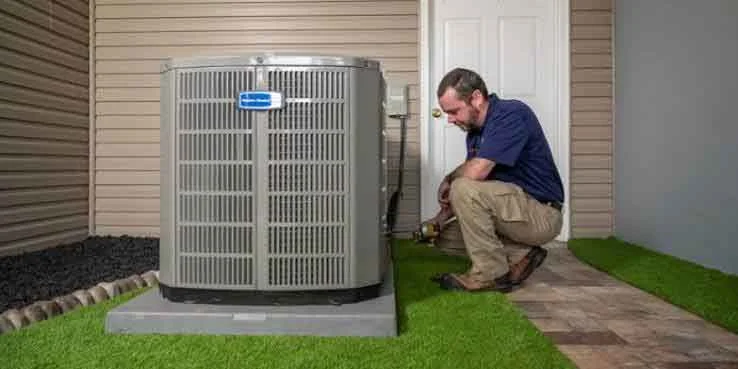
Portable industrial spot coolers are available in different capacities, with some models featuring multiple directional outlets. For example, the published specifications from Air Coolers Rental UAE list portable units with cooling capacities of approximately 4.7 kW, 6.1 kW and 9.4 kW, alongside different airflow and electrical requirements. These are equipment-specific examples, not universal specifications for every rental fleet. Source: Industrial Portable Air Conditioners Rental.
How directional spot cooling works
A refrigeration-based spot cooler draws in air, removes heat through its cooling circuit and supplies cooled air through a directed outlet. The unit must also reject the extracted heat, typically through an exhaust duct or a separate condenser arrangement, depending on its design.
The outlet can be positioned towards an occupied workstation, packing table or suitable operator location.
The objective is to improve local thermal conditions without unnecessarily cooling the entire building.
Can directional nozzles deliver 18°C air?
An outlet-air temperature of approximately 18°C may be a design target for some spot-cooling applications, but it is not a guaranteed output for every machine or operating condition.
Actual discharge temperature depends on the equipment specification, entering-air conditions, operating mode, airflow and ambient environment.
More importantly, the air temperature at the nozzle is different from the temperature experienced by a worker. The result also depends on the distance from the outlet, air velocity, radiant heat, clothing, physical workload and surrounding air conditions.
For this reason, a supplier should confirm the specified supply-air temperature and airflow under the expected operating conditions rather than promising that every installation will deliver 18°C air.
Benefits for warehouse workers and forklift operators
Directional spot cooling can be useful in areas such as:
- Forklift operator stations and designated rest or staging areas.
- Packing and labelling stations.
- Inspection and quality-control workstations.
- Dispatch counters and loading-bay supervision points.
- Production lines with local heat-generating machinery.
- Temporary workstations during maintenance or HVAC failure.
The arrangement must be designed so that the airflow does not obstruct visibility, interfere with forklift operations, blow loose materials around or create an unsuitable working environment.
A spot cooler should also be positioned with safe clearance around the equipment and a suitable route for its hot exhaust.
Why spot cooling may reduce unnecessary energy consumption
Cooling one workstation generally requires less total cooling capacity than conditioning a much larger area, provided the two arrangements meet comparable requirements for the work being performed.
However, savings depend on the baseline system and the amount of cooling that can genuinely be avoided.
If the warehouse already requires full environmental control for its cargo, spot cooling alone cannot replace that requirement.
For more information about portable and packaged AC applications, see Rental Power's packaged AC rental solutions.
4. Ducted Package Air Conditioning for Whole-Bay Environmental Control
Directional spot cooling is useful for localised heat exposure, but some operations require much broader temperature control.
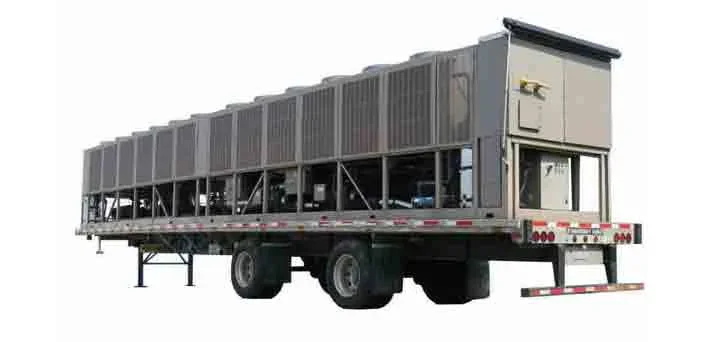
Ducted package air-conditioning systems are designed to distribute conditioned air through a planned network of ducts and outlets. Depending on the equipment and layout, they can supply cooling to multiple workstations or an enclosed warehouse bay.
They are particularly relevant when the facility needs consistent environmental conditions across a defined area rather than cooling at a single point.
When is ducted package AC the better choice?
Consider ducted package air conditioning when:
- Several workstations across the same bay need cooling.
- Employees work throughout a defined enclosed area.
- Cargo specifications require controlled ambient conditions.
- A temporary warehouse partition has been installed.
- A production or packing area needs consistent cooling.
- Existing HVAC equipment is undergoing maintenance or replacement.
- A temporary facility requires broad cooling coverage.
The equipment must be selected according to the actual cooling load, airflow requirements and installation conditions. The nominal capacity alone does not establish whether the system will maintain the required temperature.
Why environmental enclosure matters
A ducted package AC system generally performs more effectively when the intended cooling zone is reasonably enclosed.
If a loading bay remains fully open, hot outdoor air may continuously enter, increasing the cooling load and making stable temperature control difficult.
Temporary partitions, suitable doors and other measures to limit uncontrolled air exchange can help establish a more manageable cooling zone, where operationally and legally appropriate.
For temperature-sensitive cargo, the design should also consider humidity, air distribution, door-opening frequency and monitoring requirements.
Duct design and air distribution
A package AC unit can have sufficient nominal cooling capacity but still perform poorly if the duct arrangement is unsuitable.
The design should consider:
- Total required airflow.
- Duct length and pressure losses.
- Supply outlet locations.
- Return-air paths.
- Roof height and temperature stratification.
- Heat loads from equipment and lighting.
- Infiltration through doors and other openings.
- Occupancy and operating schedules.
The objective is to deliver the necessary amount of conditioned air to the intended area without creating significant temperature differences or obstructing operations.
Protecting temperature-sensitive cargo
When products require controlled storage conditions, the cooling installation should be designed around the applicable product specification.
This may require temperature sensors, continuous monitoring, alarms, humidity control and a documented response to equipment failure.
Spot cooling may supplement such a system, but it should not be used as the sole control for a large storage area unless the actual system design demonstrates that it can maintain the required conditions.
For larger projects, an HVAC engineer may recommend packaged AC units, air-handling units connected to a chiller, or another temporary system based on the required conditions.
Rental Power's temporary cooling services in Dubai provide a starting point for businesses assessing additional cooling capacity for industrial and commercial applications.
5. Spot Cooling vs Ducted Package AC: Which System Should You Choose?
The main difference is the intended area of coverage.
| Factor | Directional spot cooling | Ducted package AC |
|---|---|---|
| Primary purpose | Cooling specific occupied locations | Cooling a larger defined zone |
| Typical application | Workstations, local heat exposure, equipment areas | Warehouses, production bays, enclosed work areas |
| Installation | Usually simpler, subject to exhaust and drainage requirements | Requires suitable placement, ducting and commissioning |
| Air distribution | Direct outlet or short flexible duct | Designed network of supply outlets |
| Open loading dock | Can be useful for targeted cooling, depending on conditions | More challenging if the area remains fully open |
| Temperature-sensitive cargo | Not usually sufficient for an entire bay by itself | Potentially suitable when properly designed and monitored |
| Energy assessment | Compare the spot cooler load with the cooling actually avoided | Calculate the full cooling load and required operating conditions |
| Main limitation | Limited coverage per unit | Higher installation complexity and potentially larger power demand |
Published rental specifications illustrate the difference in scale. Rental Power describes packaged AC applications ranging from smaller commercial units to larger industrial installations, while portable units are generally used for more localised cooling. Actual available capacities depend on the supplier's fleet. Source: Packaged AC Units Rental UAE.
A practical example
Imagine a distribution warehouse with three packing stations beside a loading dock.
If the main issue is worker discomfort at those stations, several strategically positioned spot coolers may be worth evaluating.
If the entire packing bay must remain within a defined temperature range to protect products, a ducted package AC installation with suitable enclosure may be necessary.
If the warehouse contains both ordinary storage and a temperature-sensitive zone, a combination of targeted cooling and a separate controlled environment may be appropriate.
The right answer depends on the operational requirement, not simply on which machine has the lowest rental price.
6. Power Consumption Comparison: Spot Coolers vs Package AC
Electricity consumption should be assessed before choosing temporary cooling equipment, especially where the installation will operate for long shifts or depend on a rented generator.
The first step is to distinguish cooling capacity from electrical input.
- Cooling capacity, measured in kW of cooling or refrigeration tons (TR), indicates how much heat the equipment can remove under specified conditions.
- Electrical input, measured in kW, indicates the rate at which the equipment consumes electrical power.
- Energy consumption, measured in kWh, is the amount of electricity used over a period.
One refrigeration ton is approximately 3.517 kW of cooling capacity. It does not mean the equipment consumes 3.517 kW of electricity.
Published spot-cooler power consumption
The following figures come from the published technical data of one industrial portable AC rental supplier. They are examples for comparison, not guaranteed figures for all models.
| Portable AC model | Published cooling capacity | Published electrical input |
|---|---|---|
| 1.5 TR | 4.7 kW cooling | 1.7 kW |
| 2 TR | 6.1 kW cooling | 2.1 kW |
| 3 TR | 9.4 kW cooling | 3.3 kW |
Source: Air Coolers Rental UAE — Technical specifications.
Actual consumption may vary with operating conditions, equipment condition, ambient temperature and control settings.
Calculate daily electricity consumption
The basic calculation is:
Consider a 3 TR spot cooler with a published electrical input of 3.3 kW.
If it operates for 10 hours at that input power:
If it operates for 12 hours:
These are illustrative calculations assuming the stated input remains constant throughout the operating period. Actual metered consumption may differ.
Compare several spot coolers with one package AC system
Suppose a facility considers using four 3 TR spot coolers. Based on the published 3.3 kW input for the example model, their combined nominal electrical input would be:
For 10 hours at that combined input, the energy calculation would be 132 kWh.
However, this calculation does not establish that four spot coolers are equivalent to one package AC installation. Their combined cooling capacity, air distribution, heat rejection and performance under actual site conditions must be assessed separately.
A package AC system may have a different efficiency, fan power, operating pattern and cooling capacity. A fair comparison therefore requires the actual equipment data and a calculation of the cooling load each option must meet.
How to estimate potential energy savings
If the existing system cools an entire warehouse but the proposed arrangement serves only selected work areas, compare the measured energy consumption of the two arrangements while maintaining the necessary operating conditions.
The calculation is:
For example, if an existing system consumes 1,000 kWh over a representative period and a proposed system consumes 700 kWh while meeting the same necessary requirements, the calculated reduction is 30%.
This is a hypothetical illustration, not a forecast for a specific warehouse. A reliable estimate must account for the actual load, weather, operating hours, ventilation and required cargo conditions.
7. Generator Sizing for Temporary Cooling Installations
Where grid power is unavailable or insufficient, a generator may be required to support temporary cooling equipment.
Correct generator sizing is important because air-conditioning compressors, fans and associated equipment can impose different electrical loads during startup and operation.
Selecting a generator based only on the sum of the cooling capacities in TR can result in an unsuitable installation.
Step 1: Identify the electrical input of every unit
Obtain the manufacturer's electrical data for all equipment that will operate together.
Include:
- Spot coolers or package AC units.
- Supply and exhaust fans.
- Pumps, where applicable.
- Controls and monitoring equipment.
- Lighting and other essential site loads.
- Additional machinery that will share the generator.
Use the actual electrical input and current requirements, not the nominal cooling capacity, to calculate the connected load.
Step 2: Check voltage, phase and starting requirements
Confirm whether the equipment requires single-phase or three-phase power and whether the available generator can provide the correct voltage and frequency.
Compressor starting current may be significantly higher than normal running current, depending on the motor and starting arrangement.
The generator must be able to handle these transient loads without unacceptable voltage or frequency dips.
Where several compressors may start at the same time, a suitable starting sequence or control arrangement may help reduce the peak demand. This should be assessed by the electrical contractor or generator supplier.
Step 3: Convert electrical demand into generator capacity
Generator ratings are commonly expressed in kVA, whereas equipment input is often given in kW.
The relationship is:
For illustration, if a load draws 20 kW at a power factor of 0.8:
This is a basic steady-state calculation. It does not account for compressor starting, harmonic loads, altitude, ambient-temperature derating, future expansion or other installation constraints.
A generator rated at 25 kVA should therefore not automatically be assumed suitable for a 20 kW air-conditioning load.
Step 4: Consider compressor startup and simultaneous loads
A generator supplier should review the actual compressor starting method and load sequence. Direct-on-line starting, soft starters and variable-frequency drives can produce different starting characteristics.
If multiple units will start simultaneously, the peak electrical demand may be substantially different from the normal running demand.
The final selection should account for the manufacturer's starting data, acceptable voltage dips and the generator's transient response.
Step 5: Allow for the site environment
Dubai's high ambient temperatures can affect generator performance and the operating conditions of air-conditioning equipment.
The installation design should consider the generator's published ratings, site ventilation, exhaust clearance, fuel arrangements and safe operating location.
Where the generator is outdoors or near a loading area, its positioning must also account for vehicle movement, exhaust discharge and noise requirements.
Illustrative electrical load for spot coolers
Using the published inputs for the example portable units:
| Equipment arrangement | Combined nominal input | Energy over 10 hours at constant input |
|---|---|---|
| One 1.5 TR spot cooler | 1.7 kW | 17 kWh |
| Two 2 TR spot coolers | 4.2 kW | 42 kWh |
| Four 3 TR spot coolers | 13.2 kW | 132 kWh |
These figures describe nominal running energy under the stated assumptions. They do not represent generator sizes or recommended generator ratings.
Generator capacity must be determined separately after considering power factor, starting characteristics, voltage requirements and all connected loads.
For larger installations, request an integrated assessment covering temporary cooling equipment and power generation rather than arranging each component independently.
8. Industrial Ventilation in Dubai: When Cooling Alone Is Not Enough
Industrial ventilation is an important part of heat management, but it must be selected according to the problem being addressed.
A warehouse may need cooling to reduce indoor temperature, ventilation to remove heat or contaminants, or both.
Exhaust ventilation
Exhaust fans remove air from a building or defined zone. They may be useful for removing accumulated heat, provided an adequate supply of replacement air is available.
However, if hot outdoor air enters the facility as a result, ventilation alone may not produce the desired cooling effect.
The airflow arrangement must be evaluated under the actual site conditions.
Air movement and worker comfort
Air movement can affect thermal comfort, but fans do not remove heat from a space in the same way as a refrigeration-based air conditioner.
The effect depends on air temperature, humidity, radiant heat, physical activity and other environmental factors. Fans should not be treated as a universal solution for heat exposure, especially where the air is extremely hot.
Evaporative cooling
Evaporative coolers can be useful in some industrial applications because they use evaporation to cool incoming air. Their performance depends heavily on outdoor humidity and the available airflow.
They also add moisture to the air, which may make them unsuitable for certain cargo-storage environments or processes requiring humidity control.
Dubai's varying temperature and humidity conditions should be considered before selecting this type of equipment.
Combining ventilation and temporary AC
A suitable industrial cooling arrangement may combine:
- Directional spot coolers for selected workstations.
- Ducted package AC for enclosed work areas.
- Exhaust ventilation for appropriate heat-removal applications.
- Airflow-management measures around loading docks.
- Monitoring systems for temperature-sensitive goods.
The correct combination depends on the facility's heat load, outdoor conditions, occupancy and operational constraints.
For industrial applications, a site assessment should determine whether additional cooling, ventilation improvements or both are needed.
9. How to Choose a Temporary Cooling Rental Provider in Dubai
Choosing the right supplier involves more than comparing the daily or monthly rental price.
The supplier should be able to explain how the proposed equipment will meet the required conditions, what power supply is necessary and which installation services are included.
Before accepting a quotation, ask for:
- Cooling capacity: The rated capacity of each unit under the expected operating conditions.
- Electrical requirements: Voltage, phase, running current, input power and compressor-starting requirements.
- Air distribution: Nozzle arrangements, duct sizes, airflow and intended coverage.
- Heat rejection: The required exhaust arrangement or condenser installation.
- Condensate management: Drainage requirements during continuous operation.
- Installation scope: Delivery, placement, ducting, electrical connections and commissioning.
- Power generation: Whether a generator is required and how its capacity will be determined.
- Maintenance support: Servicing arrangements, emergency response and replacement equipment.
- Rental duration: Daily, weekly or monthly rates and the terms for extending the hire.
- Performance verification: How temperature, airflow and energy consumption will be assessed.
A complete quotation should explain the equipment, installation, power requirements and any additional charges so that different suppliers can be compared fairly.
For businesses evaluating temporary cooling in Dubai, it is worth discussing the warehouse layout, heat sources, required temperatures and available power before selecting the final configuration.
If a broader range of air-conditioning equipment is required, explore rental AC in UAE to assess the available rental options.
10. Frequently Asked Questions
What is temporary cooling in Dubai?
Temporary cooling is the deployment of rented air-conditioning or cooling equipment to provide additional temperature control for a defined period. Applications include warehouses, logistics facilities, factories, construction projects, temporary workspaces and HVAC emergencies.
What is the difference between spot cooling and ducted package AC?
Spot cooling directs conditioned air towards specific locations, such as workstations or equipment areas. Ducted package AC distributes conditioned air through a duct network to cool a larger defined area. The choice depends on the required coverage and environmental conditions.
Can a directional nozzle deliver 18°C air?
Some systems may achieve an outlet-air temperature around 18°C under suitable conditions, but this is not a universal specification. The actual temperature depends on the unit, airflow and entering-air conditions. Outlet temperature also does not indicate the temperature of the surrounding warehouse or the conditions experienced by a worker.
Is spot cooling more energy-efficient than cooling an entire warehouse?
It can reduce unnecessary energy use when only selected work areas require cooling. However, the actual savings depend on the existing system, equipment efficiency, operating hours and required environmental conditions. Energy savings should be calculated or measured rather than assumed.
When should a warehouse use ducted package air conditioning?
A ducted package AC system is worth evaluating when several workstations or an entire defined bay require conditioned air. It is especially relevant where environmental conditions must remain consistent across an enclosed area. Open loading docks may require additional measures to manage hot-air infiltration.
How much electricity does a portable spot cooler consume?
Consumption varies by model. One published industrial rental specification lists electrical inputs of 1.7 kW for a 1.5 TR unit, 2.1 kW for a 2 TR unit and 3.3 kW for a 3 TR unit. Actual consumption depends on the equipment and operating conditions.
How do I size a generator for temporary air conditioning?
Start with the actual electrical input of every connected unit, then consider voltage, phase, power factor, compressor-starting demand and other site loads. The generator supplier should confirm the final rating against the equipment's electrical data and the site's operating conditions.
Is industrial ventilation enough to cool a warehouse?
Not always. Ventilation can remove accumulated heat or contaminants when correctly designed, but it does not necessarily reduce indoor temperatures when outdoor air is very hot. Depending on the site, ventilation may need to be combined with refrigeration-based cooling.
Can temporary cooling protect temperature-sensitive cargo?
Yes, provided the equipment and installation are specifically designed to maintain the cargo's required temperature and, where applicable, humidity conditions. A spot cooler alone should not be assumed to provide uniform environmental control throughout a warehouse.
Conclusion: Plan Temporary Cooling Around the Actual Heat Load
Temporary cooling in Dubai can help warehouses, logistics centres and industrial facilities manage heat exposure, support operations during HVAC maintenance and provide additional temperature-control capacity when demand increases.
Directional nozzle spot cooling is worth considering when the main requirement is to deliver cold air to specific workstations or forklift operating areas. Ducted package air conditioning is generally more appropriate when a larger enclosed bay or multiple workstations require consistent cooling. Industrial ventilation can complement these systems where heat removal and airflow management are also needed.
The most effective solution is not necessarily the system with the highest cooling capacity. It is the system that meets the actual requirements while managing electricity consumption, heat rejection, airflow and installation constraints.
Before arranging equipment, confirm the cooling load, required temperature, available electrical supply and generator requirements. This provides a more reliable basis for selecting rental equipment and estimating operating costs.
For commercial and industrial projects, explore temporary cooling in Dubai or compare the available options for rental AC in UAE.